
Venue
Melkweg
Amsterdam, North Holland, Netherlands
Biography of Melkweg
A milk factory next to Leidseplein
In the summer of 1970, a youth cultural project occupied an empty milk factory on the Lijnbaansgracht, a stone's throw from Leidseplein. The building had been the De Granaatappel sugar refinery and, since 1920, a plant for the OVVV dairy cooperative until its closure in 1969. That first summer there was tea, a restaurant, and a single room for music, cinema, and theater. The experiment was repeated in 1971 and 1972; since 1973, Melkweg has been open all year round. It remains the only industrial building surviving within the Amsterdam canal ring, an industrial brick structure in the heart of the city, right next to the city theater.
A biotope of subcultures
What was born as a hippie center became a non-profit multidisciplinary venue: concerts, club nights, cinema, theater, and exhibitions under the same roof. From hippies to punk, from grunge to hip hop, Melkweg served as a nursery for styles before they crossed into the mainstream. U2 played on its stage in 1980, Nirvana in November 1989, and Pearl Jam in February 1992, when they were not yet filling stadiums. Lady Gaga sold out The Max in 2009 and Prince improvised two flash concerts in July 2011, announced at the last minute. That reputation as a springboard stage coexists with a daily program that continues to mix established names, emerging talent, musical cinema, and the Young Creatives program.
The Max, the Oude Zaal, and the rest of the map
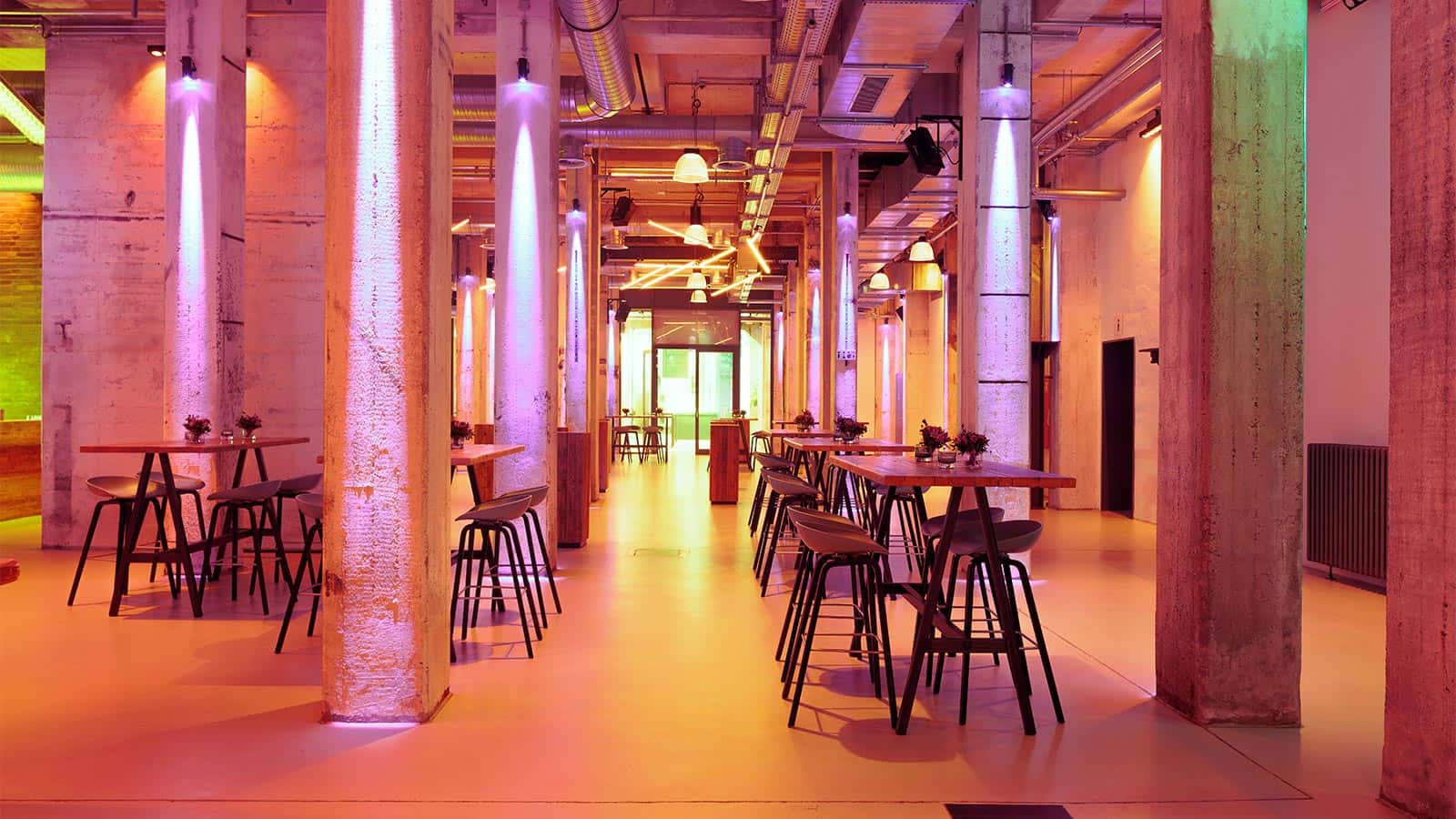
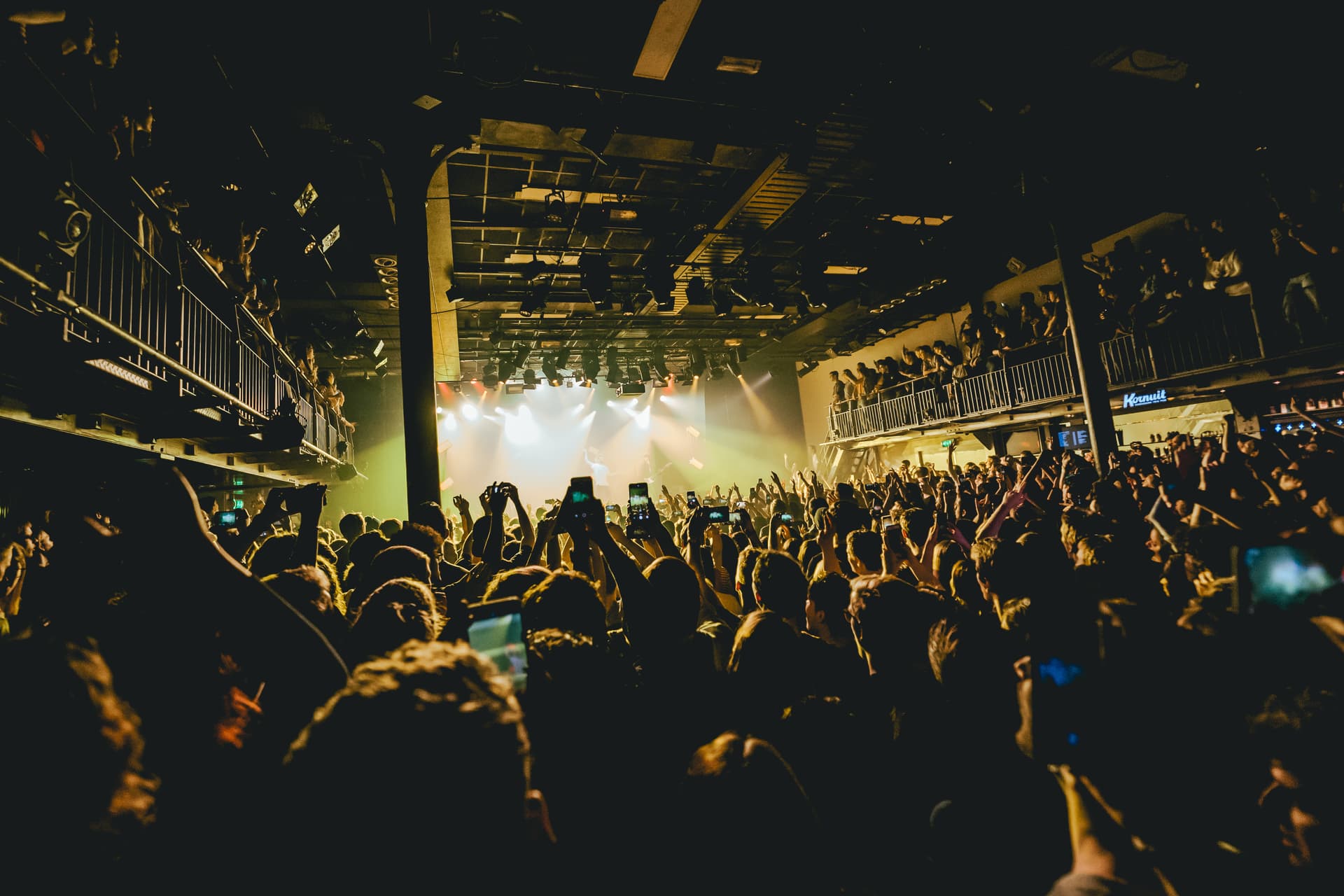
The building houses three concert and club rooms, a cinema, an exhibition space, and a café. The Max, opened in 1995 and expanded in 2007, is the main dance floor: a large stage, side balconies, and an L-Acoustics K2 PA system designed for both concerts and parties. The OZ, the Oude Zaal, is the historic room of the venue, with a Martin Audio W8 Compact system, and remains a club floor and a space for mid-sized bands. The UP, on the second floor, covers more intimate capacities. Since 2009, Melkweg has also programmed the Rabozaal, a room suspended between its factory and the Internationaal Theater Amsterdam, useful when an event needs more than one floor at a time.
Electronic dance floor from Monday to ADE
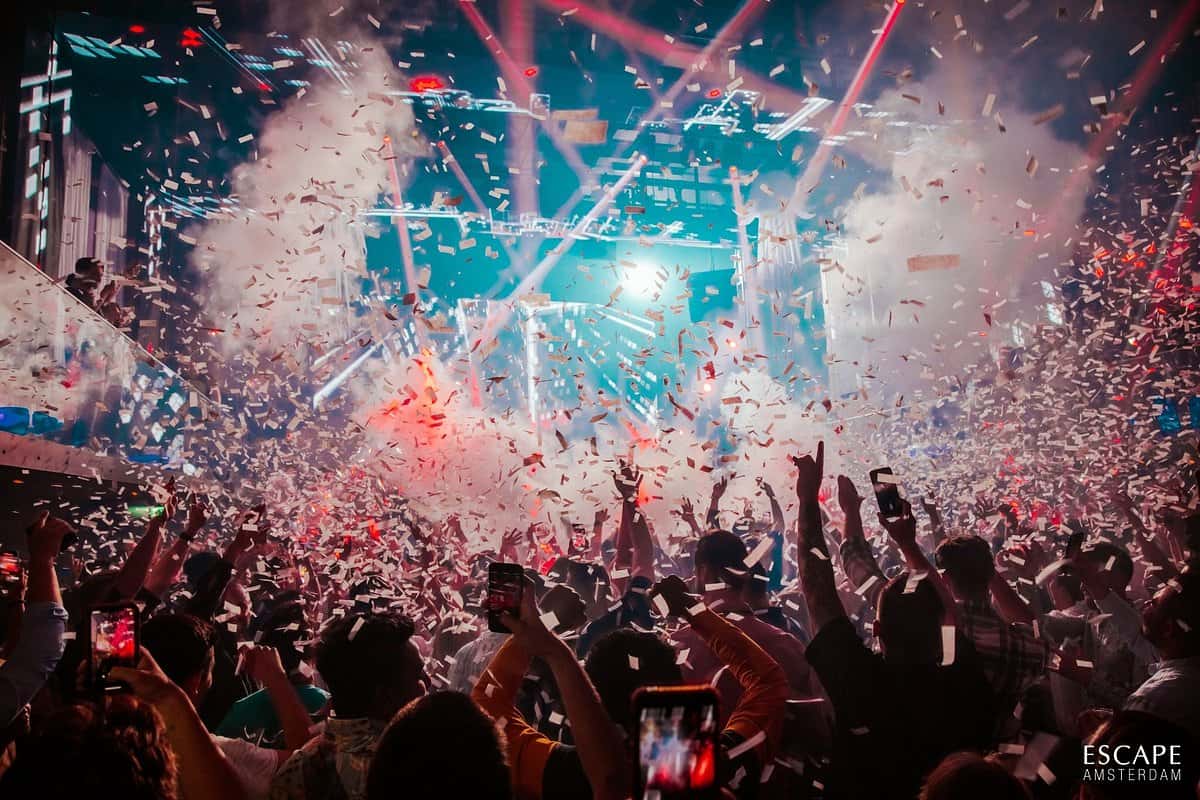
Electronics is not an appendix: it has a home and a calendar. Cheeky Monday hosts drum and bass and jungle at the beginning of the week; Techno Tuesday maintains groover techno every Tuesday. In October, the Amsterdam Dance Event turns the brick building into a campus of club nights, from house and techno to drum and bass, trance, or live audiovisuals. Club nights usually close at 04:00 or 05:00. Every year, more than half a million people pass through this venue, including those who come for a concert, a movie, or to stay until closing on the dance floor.