
Venue
Kraftwerk Berlin
Berlin, State of Berlin, Germany
Biography of Kraftwerk Berlin
Steel cathedral next to the Wall
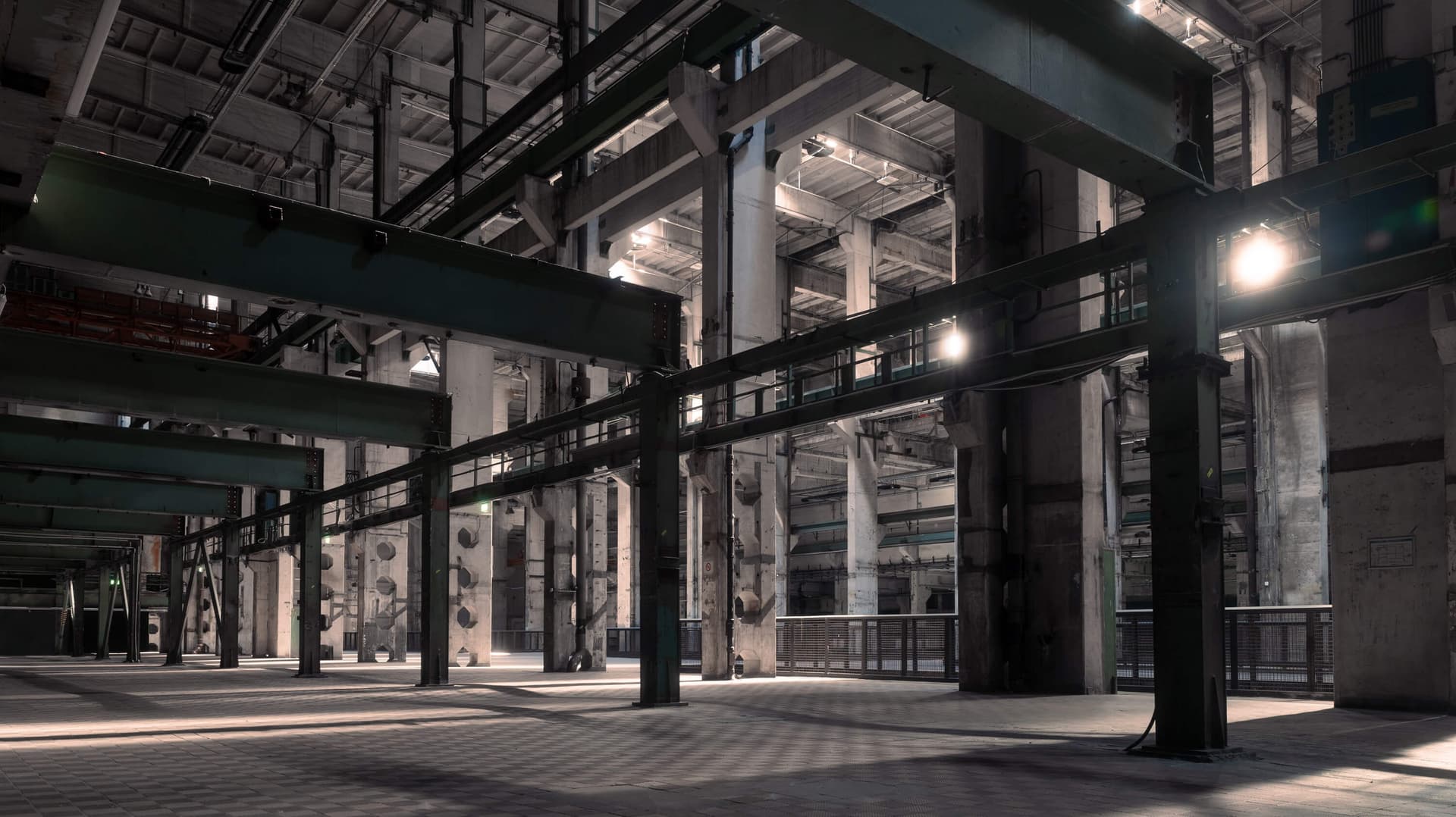
Built between 1960 and 1964, at the same time as the Wall, the former Heizkraftwerk Mitte supplied heat and electricity to East Berlin until 1997. Then came the industrial silence. In 2006, Dimitri Hegemann—the same driving force behind Tresor—recognized a breathtaking space in the turbine hall: steel, city, concrete, and dust. In May 2007, the club reopened in the building's basement. The Kraftwerk Berlin cultural venue was presented to the public on October 2, 2010, with the architecture exhibition Realstadt. Wünsche als Wirklichkeit, spanning 8,000 m² of halls.
One hundred meters of concrete and a crane
What defines the place is not a stage or a nightclub booth, but the scale. The Ebene 2 spans one hundred meters in length with a height of twenty meters. An original bridge crane, a relic of the power plant, moves across the hall and allows for installations impossible in any other Berlin venue. Three floors are connected by voids, stairs, and elevators: the ground floor can operate as an entrance, box office, and cloakroom; the intermediate gallery lends itself to a lounge; above, the turbine cathedral. The Schaltraum, the control room with a wall of monitors, and the Laterne are preserved. The operator Schaltraum Berlin GmbH offers it today as a space for exhibitions, concerts, performances, and presentations.
Techno, Atonal, and the expanded dancefloor
Tresor and OHM remain at Köpenicker Straße 70. Kraftwerk does not replace those clubs: it envelops them. Since its reactivation in 2013, Berlin Atonal has turned the power plant into a stage for experimental electronics, sound art, and long-duration concerts. This architecture hosted the premiere of SKALAR by Christopher Bauder and Kangding Ray during the 2018 CTM; Deep Web by Bauder and Robert Henke; and cycles such as Metabolic Rift or VEKTOR. Ryoji Ikeda, Cyprien Gaillard, the Staatsoper, Sharon Eyal, and Florentina Holzinger have worked here. The press compared it to a Berlin-style Tate Modern: not because of the museum, but because of the industrial ruin put at the service of productions that require a volume almost no other club in the city can provide.
Open only when there is an event
There is no fixed weekly calendar session. The official website declares the venue closed until the next public event. That is part of its character: programming tailored to the hall, not the other way around. The Tresor Foundation seeks to preserve cultural use through surface rights; Hard Wax and the Academy for Subcultural Understanding have joined the area. The energy no longer comes from the turbines, but the building remains one of the cathedrals of Berlin techno: a physical venue, not a party brand, where the dancefloor, the exhibition, and the concert fit into the same concrete.