
Club
Mojo Club
Hamburg, Germany
Biography of Mojo Club
The Reeperbahn floor opens up
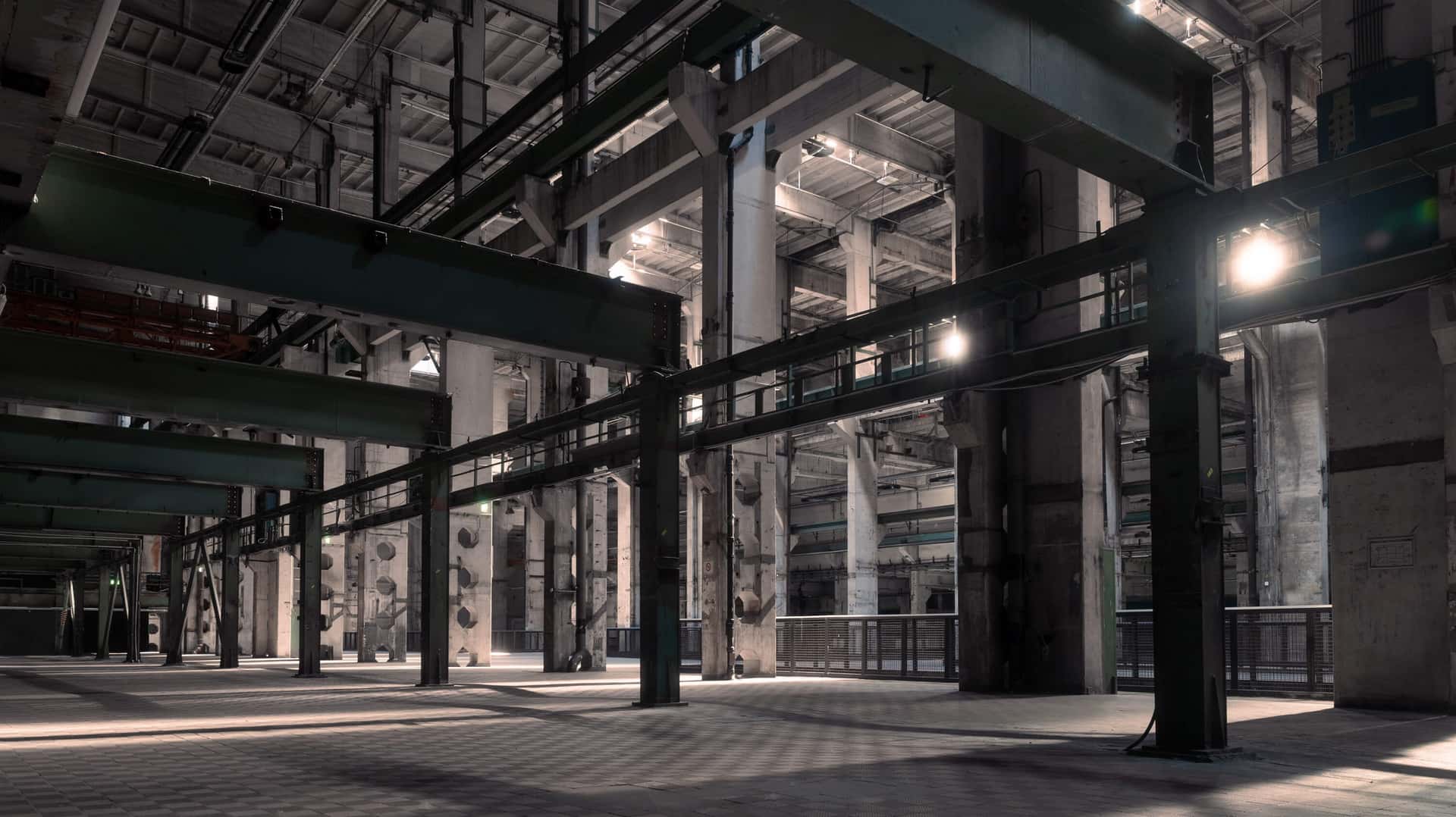
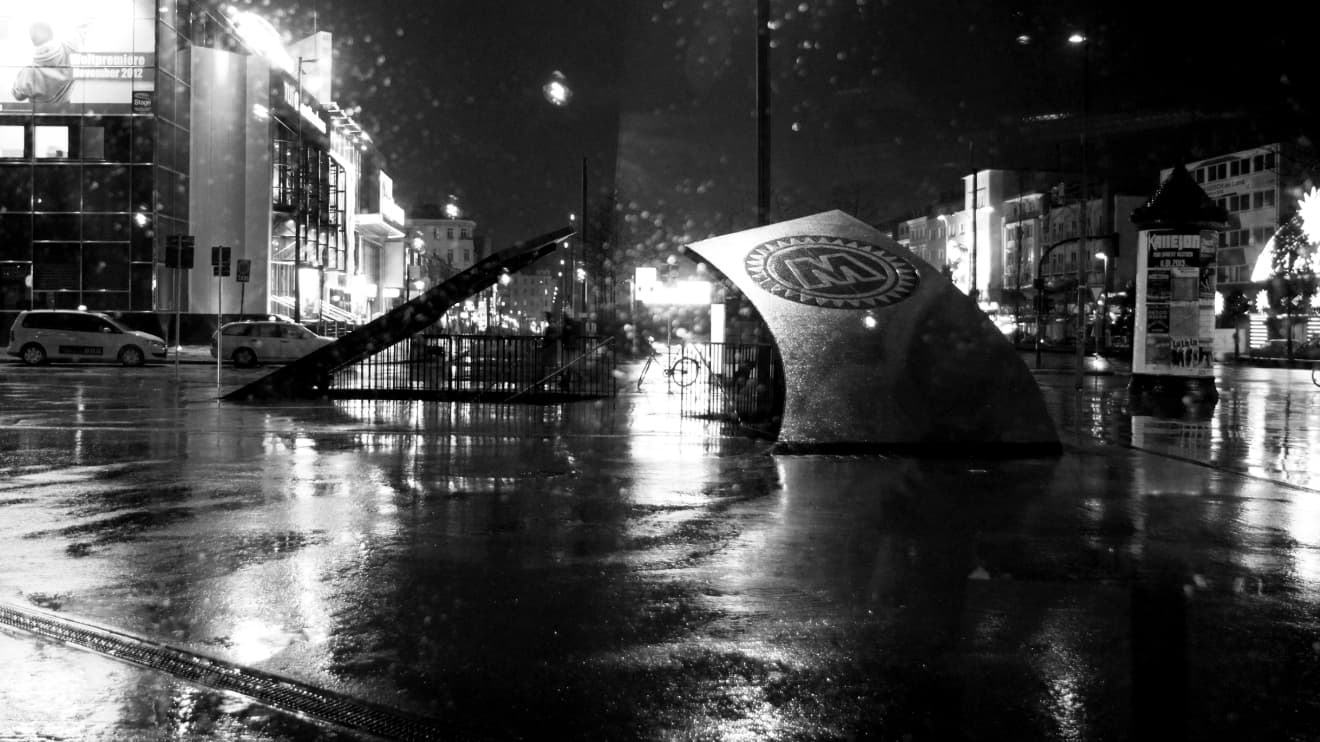
Two multi-ton hydraulic trapdoors, engraved with the jagged M of the logo, rise from the pavement at Reeperbahn 1 to reveal a staircase of forty-six steps. The Mojo Club does not compete with the neon of St. Pauli: it hides beneath Hadi Teherani's Dancing Towers and only becomes visible when the night begins. Below, Thomas Baecker designed a circular room of raw concrete and wood, with a curved grandstand, two monolithic bars, and a wooden plank dance floor on a floating bed. Rotating beech slats filled with mineral wool regulate the sound. The capacity is 800 people. There are no sponsorship logos. The venue retreats so that the dance floor, the DJ, and the stage can take command.
Dancefloor jazz for cool cats
On February 11, 1989, Leif Nüske and Oliver Korthals organized the first night at the Bad-Galerie of the Holthusenbad with the motto Dancefloor Jazz For Cool Cats. More than a thousand young people attended. After the Prinzenbar, the Kir, the Cap San Diego, and the Unendlich —later Molotow—, in 1991 the club settled into an abandoned bowling alley on Reeperbahn/Zirkusweg. Above the door: Uncompromising Turntables. In the nineties, the Mojo was the Hamburg outpost of London acid jazz: Gilles Peterson, James Lavelle, Goldie, Kruder & Dorfmeister, Massive Attack, Moloko, or The Black Eyed Peas passed through that bowling alley. Hip-hop, jazz, soul, drum and bass, and dubstep sustained the program. Between 1992 and 2008, thirteen volumes of Mojo Club Presents Dancefloor Jazz turned the venue into a catalog. Raphaël Marionneau made Le Café Abstrait a chill-out laboratory there. In April 2003, the first stage closed; John Coltrane's A Love Supreme was the last record. The building was demolished in 2009.
The grotto under the towers
On February 2, 2013, the club reopened on the same site, now in the basement, with the same Coltrane track as the first needle drop. The new venue was designed for concerts: a 74 m² stage, two floors, high dome. Since then, Janelle Monáe, Nubya Garcia, Sons of Kemet, Thundercat, FKA Twigs, Ghostface Killah, DJ Shadow, Modeselektor, or Digitalism have performed. The booking remains a filter, not a container: jazz, soul, hip-hop, electronic, and club nights with names like The Disco Boys or Mousse T. On the ground floor, next to the trapdoors, the Mojo Jazz Café opens a terrace to the Reeperbahn; on Weekends there is vinyl until 1:00 AM and the Beyond series records one-hour themed sessions there.
Still a club, still underground
Nüske speaks of the venue as a playground: there are rollerskate jams, soul allnighters, and a clear access rule on club nights —21 years old—. Smoking is not allowed during concerts. Upstairs the Kiez is overcrowded; downstairs the Mojo continues to bet on extravagance, warmth, and service. Uncompromising turntables, since 1989.
How to get to Mojo Club
Reeperbahn 1, 20359 Hamburg
Open in Google MapsSt. Pauli
U-Bahn · U3 · 2 min walk
Reeperbahn
S-Bahn · S1, S3 y S7 · 8 min walk
U St. Pauli
Bus · 16, 17, 601 · 2 min walk