
Venue
Village Underground Lisboa
Lisbon, Portugal
Biography of Village Underground Lisboa
Containers stacked facing the Tagus
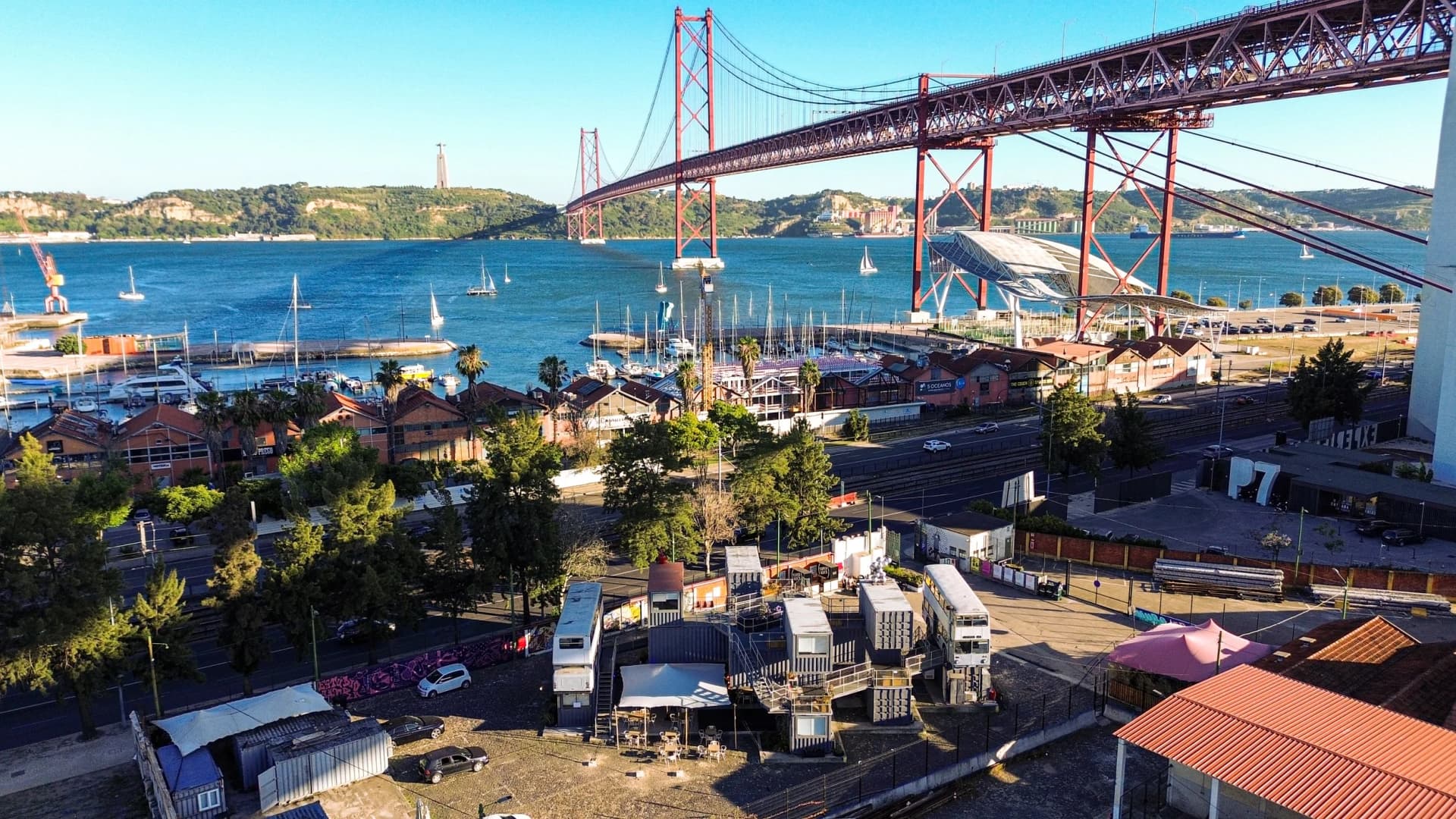
Under the red deck of the Ponte 25 de Abril, on the shore of Alcântara, shipping containers stacked like Tetris and two double-decker Carris buses draw the most recognizable profile of Village Underground Lisboa. The venue does not hide its industrial origin: it was born in the courtyard of the Museu da Carris and today opens with its own entrance to the Avenida da Índia, with the Tagus and the Santo Amaro dock a stone's throw away. Metal stairs, terraces on the blocks, and a central courtyard turn the site into an improvised village, with a 150 m² club-room as a nocturnal engine and an esplanade that looks out to the river.
From the museum courtyard to the avenue door
The concept was born in London in 2007 and Mariana Duarte Silva planted it in Lisbon in May 2014, with 14 reused containers. What started as a coworking space for artists consolidated as a nocturnal meeting point: Forbes placed it among the four most innovative coworking spaces in the world. In 2019, upon turning five, it opened its own gate to the avenue. Today it adds about 2,200 m², a restaurant in a bus, the Metalbox studio, and the Container booth, designed for live broadcasts of emerging talent.
Techno, bass, and sessions until dawn
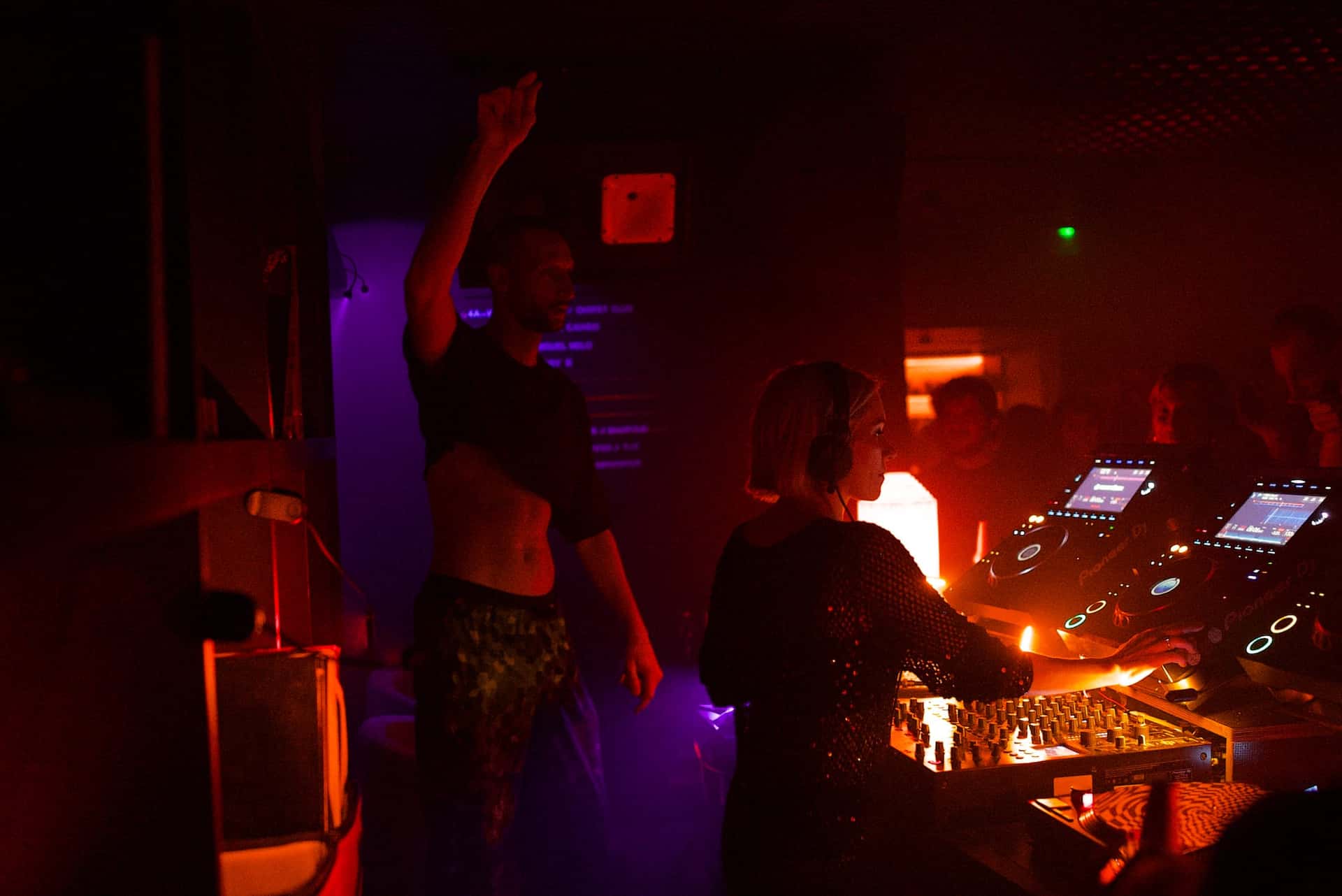
Club culture coexists here with the day. There is techno, house, drum and bass, psytrance, reggae, kizomba, and samba: from sunsets on the esplanade to closing at 06:00. Local promoters occupy the indoor dance floor, the open air, and the Beco; the venue is not confused with them. In 2019, Boiler Room recorded an open-air session among the containers. The published capacity for events is 400 people. The door admits from 16 years old and does not impose a dress code.
A village that, at night, behaves like a club
The VUL remains active, with variable programming from Thursday to Sunday, limited parking, and access also designed for reduced mobility. You eat on the bus, dance under the bridge, and the audience mixes local scenes, nomads, and neighbors. It is not a nightclub with a rigid door: it is a cultural venue that, when night falls, functions as a Lisbon club.