
Venue
Estadio La Cartuja
Seville, Spain
Biography of Estadio La Cartuja
A concrete bowl for Games that never arrived
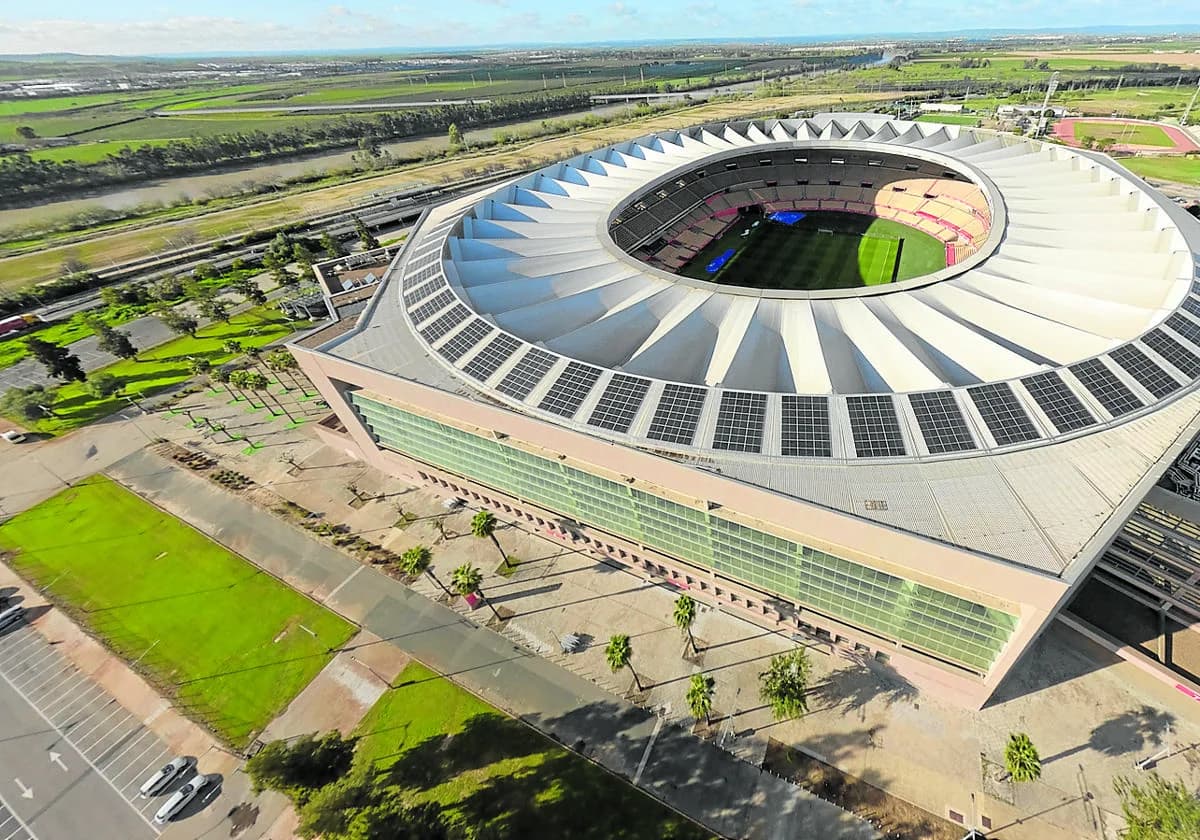
At the northern end of the Isla de la Cartuja, on the site left by the Expo'92 next to the Guadalquivir, Antonio Cruz and Antonio Ortiz built between 1997 and 1999 a compact concrete stadium, with a spoke roof and PVC textile membrane. On May 5, 1999, the kings of Spain inaugurated it with a Spain-Croatia match (3-1). It was built for the World Athletics Championships that summer and to support Seville's Olympic bids for 2004 and 2008. Neither of them crystallized. Betis and Sevilla did not move permanently, and the giant vessel remained, for years, waiting for a use worthy of its scale. In 2011, the management company removed the surname Olympic, and the venue was renamed Estadio de La Cartuja.
When football didn't fill it, electronics occupied the vessel
What athletics and club football did not occupy week by week was filled, in pulses, by music. In July 2008 and August 2009, the promoter Raveart installed the Summer Festival in the then Olympic Stadium: three areas of breakbeat, rave, and retro, with The Crystal Method and Hybrid on the lineup, over more than 15,000 m². It was one of the first Andalusian electronic macro-formats in a UEFA-category venue. On February 14, 2026, elrow returned with an XXL Carnival from 15:00 to 03:00 in the south parking lot, two stages, Adam Beyer and Fátima Hajji in the programming, and about 20,000 attendees. La Cartuja is not a nightclub: it is the vessel where the Seville scene tests the open-air festival.
Live Sur Stadium and the scale of big concerts
Madonna, U2, AC/DC, Bruce Springsteen, Rosalía, or SFDK—more than 60,000 people at the 30th anniversary of the Seville group—turned the bowl into one of the country's great musical stages. In June 2022, Manuel Carrasco gathered 74,345 spectators, an attendance record for a Spanish artist. The northern outdoor venue operates as Live Sur Stadium, managed with Live Nation for productions of around 10,000 people. Inside, stands, Grada Club, boxes, terrace, two 84 m² video scoreboards, and a four-star hotel integrated into the building coexist.
Without an athletics track and facing the World Cup
Between 2024 and 2025, the athletics track was removed, the ring of stands was lowered, and the official capacity went to 70,000 seats. Real Betis uses it as a temporary home while renovating the Villamarín. It remains the venue for the Copa del Rey final, hosted four matches of Euro 2020, and is in the Spanish dossier for the 2030 World Cup. It does not open every week: it opens when there is a match, tour, or festival. That intermittency is, today, its nature.