
The structural redesign: Transition to the Qt6 framework
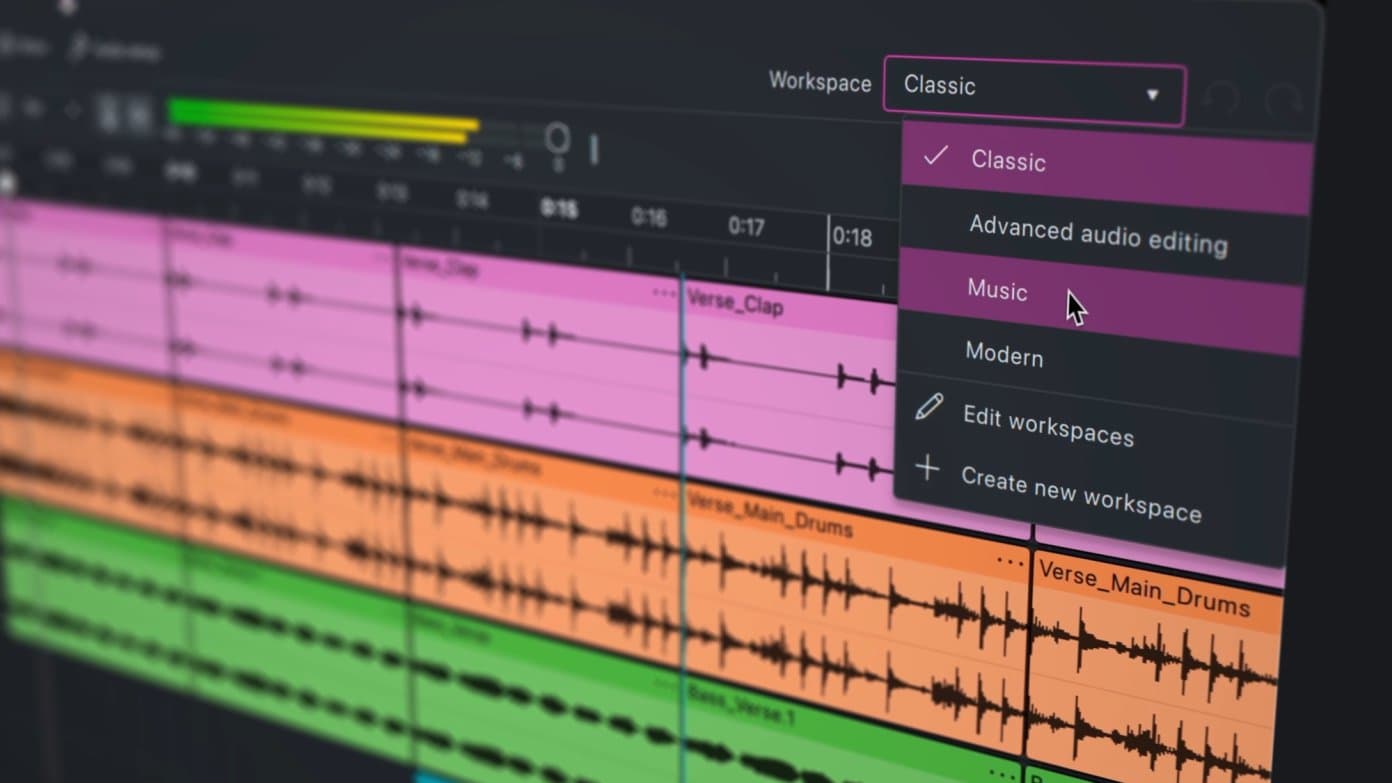
Muse Group has officially announced this September 2026 the release of Audacity 4.0, marking the biggest update to the open-source audio editor in its more than twenty-five-year history. The most significant technical change lies in the definitive abandonment of the old wxWidgets library in favor of the Qt6 framework. This transition provides the software with native hardware acceleration, fluid HiDPI scaling for high-resolution monitors, and a completely modular interface. Users now have customizable workspaces (called Modern, Classic, and Music), which allow for docking, hiding, or floating panels and toolbars according to the specific needs of each studio session.
Visually, the update incorporates support for light, dark, and high-contrast themes, adapting to the operating system's accent colors. Input and playback level meters have been integrated directly into the track headers, providing constant visual monitoring that is fundamental during the mixing phase and gain adjustment.
Evolution in clip editing and workflow
Version 4.0 introduces a deeply redesigned non-destructive editing model, aimed at streamlining audio manipulation processes. Producers and editors can now select multiple clips simultaneously using keyboard commands, group them to maintain synchronization, and move them freely across the timeline, even crossing between mono and stereo tracks. When one clip overlaps another, the software automatically replaces the overlapped section instead of blocking movement, mimicking the behavior of top-tier commercial DAWs.
The Split Tool has been made independent and optimized. By pressing the 'S' key, users can make surgical cuts directly on the waveform. Additionally, the smart paste system adapts channel configurations and automatically generates new tracks when fragments are imported from the system clipboard. Clip-based volume envelopes have also been refined, allowing for the drawing of precise automation curves without altering the original audio file.
Project management, formats, and plugin ecosystem
The software debuts the new .aup4 project file format. This save architecture integrates preview thumbnails on the home screen and stores advanced metadata regarding the appearance and layout of clips. Although projects created in versions 3.x open natively, the conversion process is strictly one-way, making retroactive saving to previous formats impossible.
In the signal processing section, Audacity 4 consolidates its compatibility with industry-standard electronic formats, including VST3, Audio Units on macOS, and LV2 on Linux systems. Direct integration with MuseHub facilitates the discovery and installation of synthesizers, effects, and sound libraries. Likewise, connectivity with the audio.com platform allows for cloud storage of projects and direct publishing. As a crucial technical novelty for Windows users, official builds now include native support for ASIO drivers, drastically reducing latency in multi-track recording operations.
Reconfiguration of the standard in open-source software
The modernization of this pillar of free software represents a strategic move by Muse Group to position Audacity as a viable alternative to more complex digital audio workstations. While version 4.0 temporarily omits previous features such as MIDI tracks, the traditional mixer, or support for LADSPA and VAMP plugins, the new technical architecture establishes a solid foundation for future implementations.
We are not changing what creators love about Audacity, but giving it the modern architecture necessary to support the intelligent tools and connected workflows of the future.
— Julia Sazhina, Chief Product Officer at Muse Group
The rewriting of the code and the improvement in computing resource management directly benefit content creators, podcasters, and independent producers. By offering a stable recording environment, cutting-edge editing tools, and an interface that responds to contemporary musical software design standards, Audacity 4.0 reaffirms its position as an indispensable tool in the audio production chain, keeping its philosophy of free access and open source intact.