
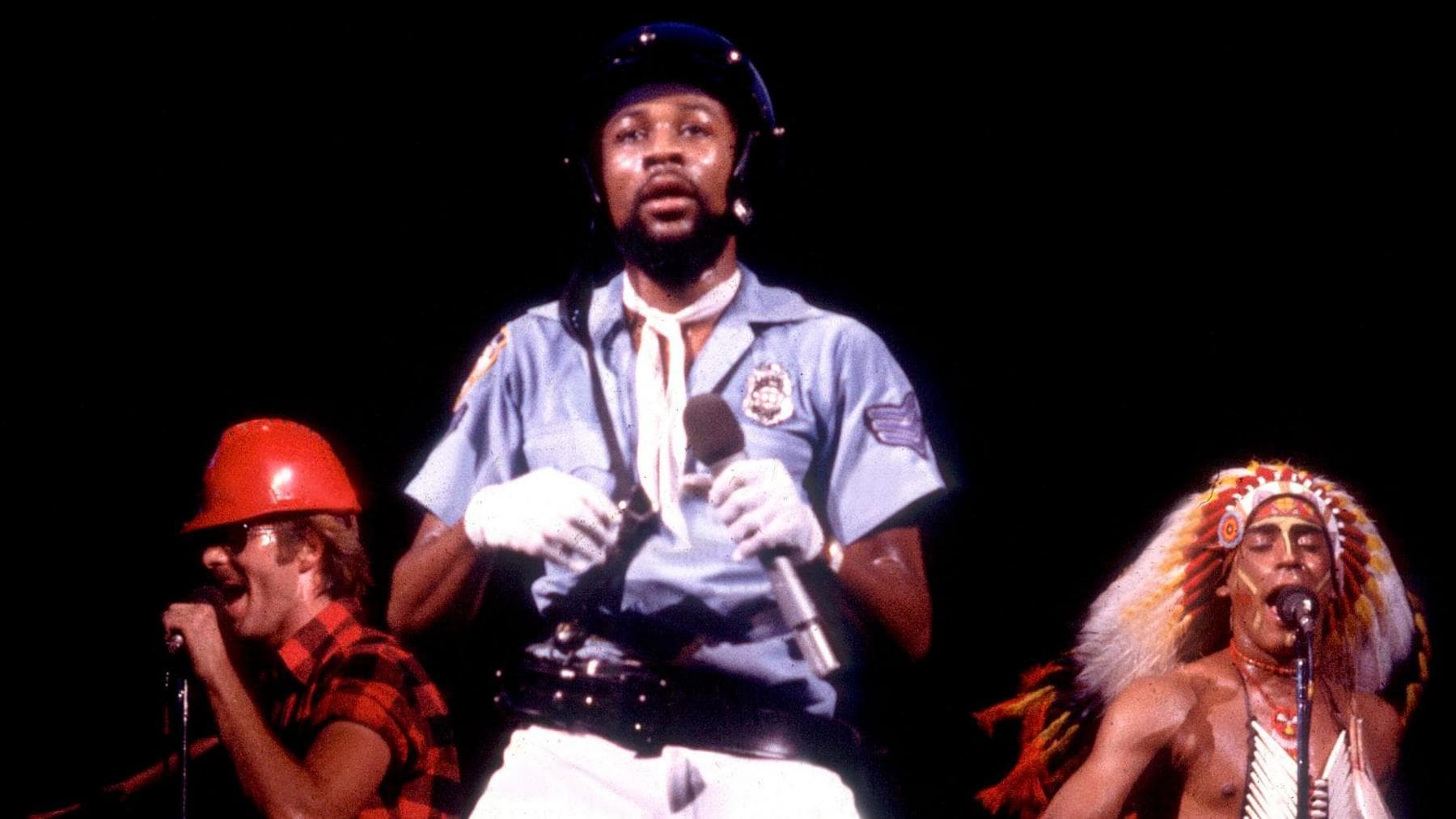

Farewell to an architect of the disco sound
Victor Willis, the unmistakable leader, co-founder, and lead singer of the legendary group Village People, has passed away at 74. According to the official statement issued on July 1st through the band's corporate channels and confirmed by his wife, Karen Huff-Willis, the artist lost his life on June 30th due to a "short but aggressive illness." The news has shaken the foundations of the music industry, bidding farewell to one of the pioneers who helped shape global clubbing culture during the explosion of disco music in the late seventies.
Born in Dallas in 1951 and raised in San Francisco, Willis developed his vocal skills in church before training in acting and dance. His talent led him to Broadway, where he participated in the original production of "The Wiz" in 1976. It was during that time that his path crossed with that of the visionary French producer Jacques Morali and his partner Henri Belolo. Morali, captivated by Willis's vocal range and stage presence, initially recruited him to record backing vocals, paving the way for the creation of a project designed to capture the energy of dance floors and the emerging underground culture.
I had a dream in which you sang the lead vocals on an album I was producing, and it became very, very big. I have four tracks, I can't pay you much now, but if you accept, I will make you a star.
— Jacques Morali (Producer and co-creator of Village People)
The rhythmic impact and the conquest of dance floors
Iconically dressed in his police or naval officer uniform, Willis was not only the front image of Village People, but the creative engine behind their greatest hits. As a co-writer of generational anthems like "Y.M.C.A.", "Macho Man", "In the Navy", and "Go West", his work set a standard in dance music production. These compositions, characterized by their relentless groove, percussion marked in a strict four-on-the-floor pattern, and brass arrangements that would later evolve into the electronic synthesis of house, managed to sell more than 100 million records worldwide.
The impact of these tracks transcended the physical format of vinyl. In 2021, "Y.M.C.A." was included in the National Recording Registry of the United States Library of Congress, and in 2022 it was inducted into the prestigious Grammy Hall of Fame. Despite the constant rotations in the group's lineup after Willis's temporary departure in 1980, his original voice remained permanently etched in the DNA of the international club circuit, serving as an indisputable bridge between disco music and the future ramifications of electronic music.
The historic battle for copyright
Beyond his undeniable contribution to the BPMs that dominated nightclubs, Willis starred in one of the most decisive legal episodes in the modern history of the recording industry. In 2012, the singer won a landmark lawsuit under the United States Copyright Act, managing to terminate the original publishing contracts and regaining partial control over the rights to 33 of his songs.
The court case against the publishers Scorpio Music and Can't Stop Productions set a monumental precedent. Under Section 203 of the 1976 law, which allows creators to recover the rights to their works 35 years after their original publication, Willis demonstrated that a co-author could unilaterally terminate their part of the agreement without the need for approval from the rest of the songwriters. This victory not only returned a substantial portion of his royalties, but opened the door for countless artists and producers to regain control over their own catalogs against the major labels.
- Co-authorship and lead vocals on tracks with more than 100 million global sales.
- Pioneering judicial victory in 2012 that redefined copyright laws in the music industry.
- Inclusion of 'Y.M.C.A.' in the National Recording Registry (2021) and the Grammy Hall of Fame (2022).
- Official return as leader and manager of the Village People brand in 2017.
The eternal echo of a groove pioneer
The perspective left by the passing of Victor Willis is that of a sound architect whose influence is indelible. Although the current scene is governed by the precision of digital synthesis, modular synthesizers, and massive festivals, the root of that collective euphoria was born in large part thanks to the theatricality and vocal energy that Willis brought to the first sound systems. His ability to transform underground culture into a global phenomenon without losing the essence of dance proves that true electronic and club music has always been about human connection. The industry is not only saying goodbye to an extraordinary singer, but to a tireless defender of artists' rights, whose legacy will continue to play on every dance floor around the world.



![Penultimate Paradise of the season at [UNVRS] Ibiza](/_next/image?url=https%3A%2F%2Fhfzgjraizxxoxxaupwkq.supabase.co%2Fstorage%2Fv1%2Fobject%2Fpublic%2Fmagazine%2Fposts%2Fe8525e09-5f75-4353-8015-3cc3aaf65709%2F0n0pu7w.jpg&w=1920&q=75)