
Venue
Royal Albert Hall
London, England, United Kingdom
Biography of Royal Albert Hall
The echo the mushrooms tamed
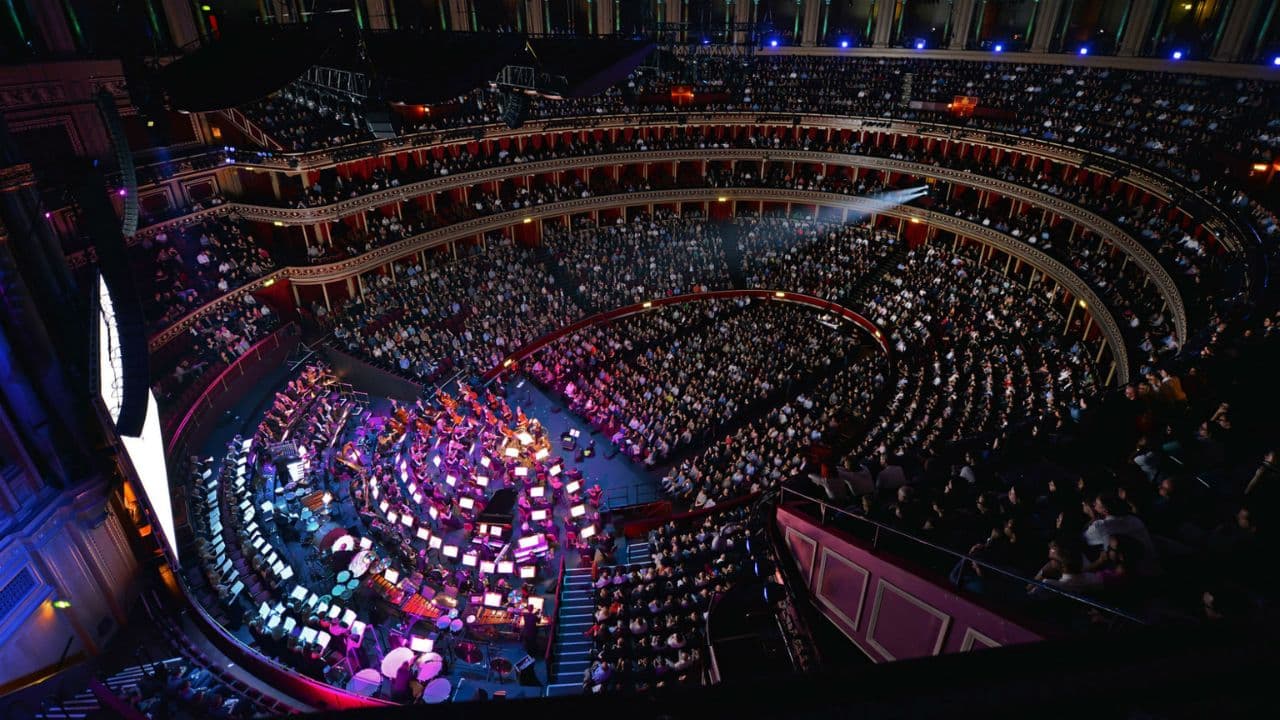
The joke lasted for decades: here, a British composer could hear their work twice. The iron and glass dome, 41 meters above the arena, turned the elliptical amphitheater of Kensington Gore into an echo chamber since its 1871 opening. Victoria opened the venue as the Royal Albert Hall of Arts and Sciences, a practical piece of the memorial to Prince Albert facing the gardens: a red Fareham brick coliseum, with a terracotta frieze and 144 boxes surrounding the central void.
The problem was tackled in layers. In 1969, large fiberglass discs were hung under the ceiling—the mushrooms or flying saucers—which continue to define the room's image. In 2019, a permanent d&b audiotechnik system arrived with 465 speakers, featuring V-Series arrays, SL-SUB subwoofers, Circle and Gallery delays, and fills in every box, so that orchestra, pop, and electronic music sound with clarity in a hostile geometry. The Willis organ rebuilt by Mander, with nearly ten thousand pipes, is the building's other air machine: the Voice of Jupiter.
Proms standing in the arena
Since 1941, after the bombing of the Queen's Hall, the BBC Proms have lived here every summer. The ritual is not for seats: the promenaders stand in the arena and the Gallery, a culture of standing listening that brings the venue closer to a dance floor, even if the code is that of a democratic classical festival. More than 390 performances a year in the auditorium and nearly a thousand more events throughout the rest of the building—including the Elgar Room, with late-night jazz—sustain the nickname of the nation's village hall. In 2024, around 1.7 million visitors passed through here.
Electronics under the dome
It is not a nightclub: it is a Victorian amphitheater that electronic music has consciously occupied. Pink Floyd used the organ in 1969; Jean-Michel Jarre brought Oxygène in 2008; a late 2018 Prom dedicated the night to the BBC Radiophonic Workshop, with Daphne Oram and Delia Derbyshire at the center. The Chemical Brothers turned boxes and corridors into a dance floor for the Teenage Cancer Trust in 2024. Kraftwerk closed the circle in June 2026 with three multimedia concerts. Ministry of Sound Classical has brought the club repertoire to an orchestral format under the same mushrooms.
A venue that rewrites itself every night
The 1996-2004 renovation added a loading dock, catering, a box office at Door 12, and access points. The maximum permitted capacity is 5,272 people, far from the 8,000 of the original design. There is no club schedule: it opens when there is a program. What does not change is the oval void and the dome: a 19th-century space that, with mushrooms, d&b, and an organist, remains one of the most demanding amplified stages in London.