
Vince Watson's legacy in electronic music
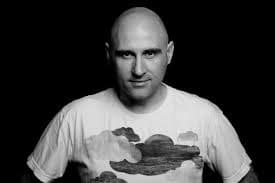
With an uninterrupted career spanning three decades in the house and techno circuits, Scottish producer Vince Watson has consolidated a massive catalog consisting of over 1,000 tracks, 250 EPs, and 18 studio albums. Throughout his career, he has released material on world-renowned record labels and performed at iconic club culture venues such as Berghain in Berlin, Womb Tokyo, and the defunct Space Ibiza, in addition to participating in large-scale events like the 909 Festival. Parallel to his artistic facet, Watson currently serves as a senior lecturer at the electronic music school of the Conservatorium van Amsterdam, one of the most prestigious academic institutions in Europe, where he teaches production, DJing, remixing, and comprehensive artist development.
Beyond his main project, Watson has diversified his sonic identity through multiple aliases. Under the pseudonym Amorphic, he channels his rawest and most industrial vision of techno, achieving releases on specialized platforms of the genre. On the other hand, his alias Quart allows him to explore more organic territories closer to deep house. Coinciding with the release of his recent EP 'The Awakening / Flashback' via the label Everysoul Audio, and the preparation of a new project called FREQ scheduled for release in 2026, the artist has decided to make his studio work methodologies public.
5 studio techniques for timeless production
Watson's technical philosophy prioritizes the humanization of sound over the parametric rigidity of contemporary digital software. To avoid monotonous repetition, lack of dynamics, and to ensure the temporal longevity of productions, the producer details five fundamental practices aimed at electronic music creators who seek to imbue their compositions with personality.
- Recording automations while standing: Watson rejects the common practice of drawing static MIDI automations with the mouse or copying and pasting data blocks. He recommends assigning parameters to a physical controller and recording the automations live, listening to the full track in its context and not in 'solo' mode. He stresses the importance of performing this process while standing instead of sitting in a chair, allowing natural body movement to be transferred to the expressiveness of the synthesizers.
- Layering of elements: The exhaustive use of sound layers is vital to build greater spatial depth, stereo movement, and harmonic warmth in the final mix. Watson emphasizes that superimposing multiple subtle textures generates a much richer sound spectrum than relying on a single flat synthesizer sound.
- Suppression and experimentation in chords: Instead of constantly adding elements to a progression, Watson suggests removing specific notes from a chord to generate greater harmonic tension and space in the mix. He advises exhaustively investigating intervals of seconds, fourths, and sixths, taking as a historical reference the complex chord structures of Detroit producer Mad Mike from Underground Resistance.
- Extended takes and natural sequences: For repetitive but musical genres like house or techno, he strongly advises against the use of closed loops of one or two bars. He proposes recording continuous performances of up to 128 bars, creating up to four distinct variations. Subsequently, these takes are combined to extract the most organic sequences, preventing the listener's brain from detecting artificial patterns.
- Frequency division and pad transposition: At the mix engineering level, he recommends separating the sub-bass frequencies from the main bass. This implies using an exclusive channel for the 'sub' and applying a high-pass filter to the original bass, allowing absolute control and precise impact on club sound systems. In the case of atmospheric pads, he suggests duplicating them, transposing the copy an octave lower at a very low volume, and automating the filters of both layers independently to generate subtle movements.
If you move, the music moves with you. Improvising multiple times while playing the track brings your tracks to life and makes them feel more human.
— Vince Watson
Academic impact and technical evolution in the clubbing ecosystem
The transition of veteran artists into educational roles evidences a maturation and structural professionalization within the electronic music industry. Watson's guidelines demonstrate that longevity in music production requires moving away from visual on-screen programming to return to the physical execution of hardware. In a context where generative sequencing tools threaten to homogenize the sound of clubs, the Scottish producer's empirical approach ensures that the human factor, controlled error, and improvisation remain the central axes of the groove. This methodology not only preserves the legacy of Detroit techno and classic house, but also establishes a rigorous academic standard for future generations of producers trained at the Conservatorium van Amsterdam.