
Biography of Freddy K
Vinyl marathons with no shortcuts
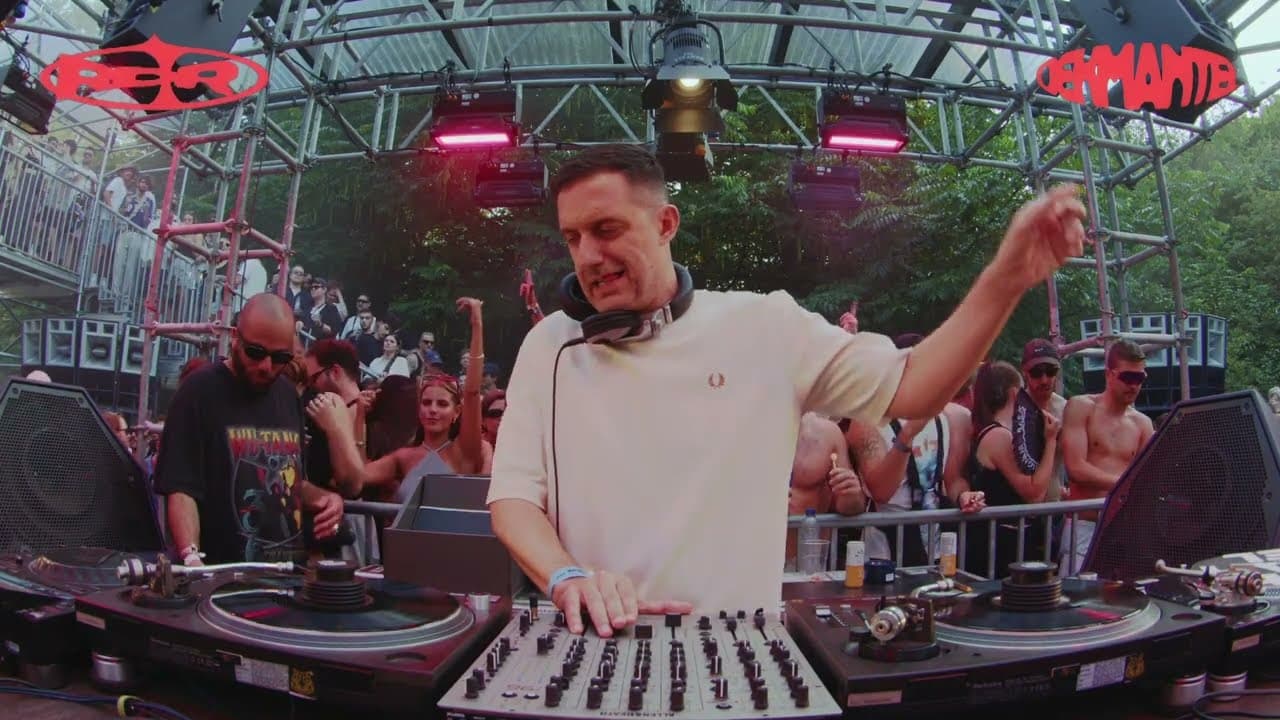
Freddy K's nights are best understood as a test of collective endurance: vinyl, physical reading of the dancefloor, and a tension that grows without relying on the easy hit. His reputation has been built around long, shifting, dance-oriented sets, where techno does not function as a closed label but as a 360-degree language. That way of DJing, raw yet very human, has made him a reference figure for those who understand the booth as a place of commitment, craft, and rave memory.
Virus, ACV and the Roman pulse
His history is linked to the electronic Rome of the nineties, in contact with the Rome sound, specialized radio programs, Sunday afterhours, warehouses, and the sound systems that defined a generation. In 1993 he launched Virus, first as a long-running radio show and later as a hub for parties, an agency, and a record store. A year later he signed with the label ACV, where he released Control EP and, in 1995, the album Rage Of Age, a dark, noisy record marked by the friction between Chicago acid, rock, and Italian rave culture. Tracks like Devo Andare maintained their status as an anthem within that imaginary.
Berlin as a second combustion
After a less visible period, focused on shops, distribution, and label work alongside figures like Sandro Nasonte, Donato Dozzy, or Giorgio Gigli within the Elettronica Romana environment, Freddy K moved to Berlin in 2009. The city reactivated his direct relationship with the dancefloor. There, he became linked to the Homopatik community at ://about blank and consolidated a legend of strictly vinyl sets of 10, 14, and even 16 hours. His entry into Berghain in 2013 and his subsequent closing sets reinforced his image as a patient, physical selector capable of sustaining energy until the end of the night.
KEY Vinyl and a long-haul ethic
As the head of KEY Vinyl, he defends a vision of techno focused on the physical format, real utility for DJs, and the development of new generations of producers. The label has released music by artists such as PVS, Héctor Oaks, and other names linked to raw, functional, and hypnotic techno, maintaining a very marked policy around vinyl. In parallel, Freddy K continues to tour international clubs and festivals, with a recurring presence in contexts such as Berghain, Dekmantel, Stone Techno, Awakenings, and other spaces in the European underground scene. His current position does not depend on a nostalgic narrative: he works from a practical continuity between Italian rave culture, Berlin discipline, and an insistent defense of techno as a collective, extensive, and deeply physical experience.