
Workflow consolidation: Ableton Live 12.4
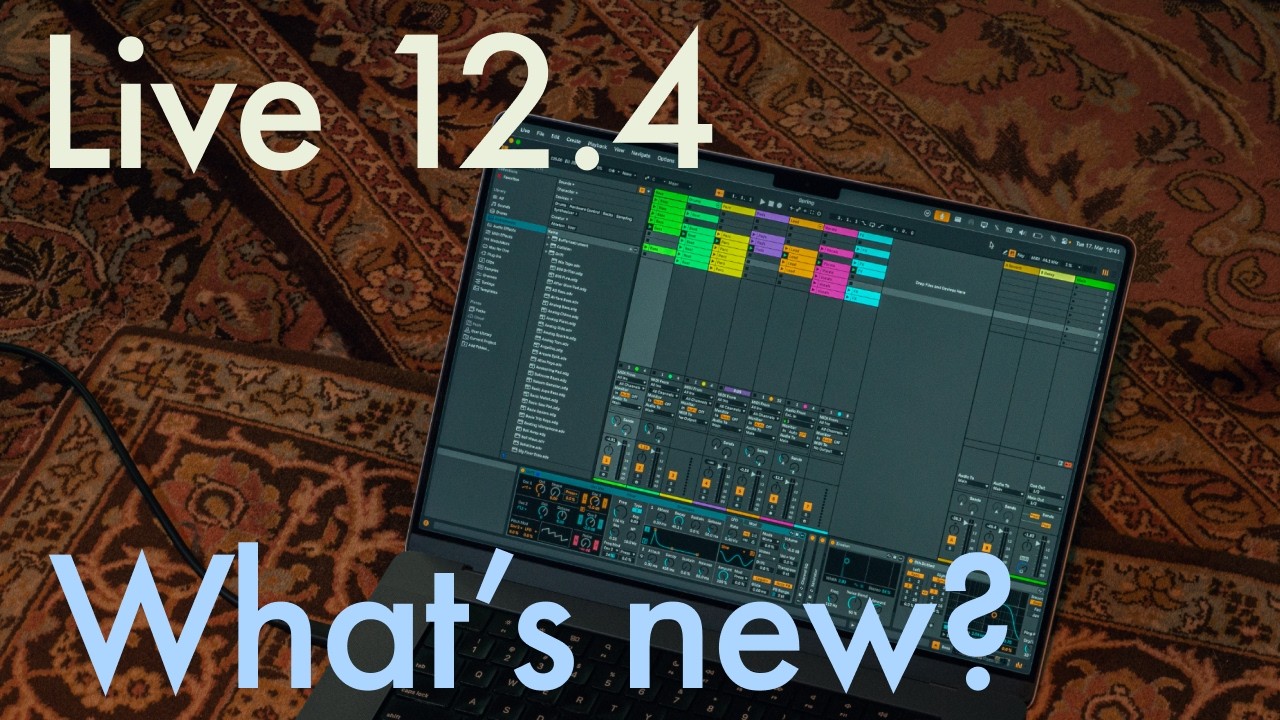
After three months of an intense public beta phase that began in February, the Berlin-based company officially released Ableton Live 12.4 this week. This update, free for all owners of a Live 12 license, presents itself as a technical turning point in electronic music production. Beyond the usual stability fixes, the software introduces cutting-edge tools that redefine studio and live collaboration, highlighting unprecedented wireless connectivity and the refinement of its frequency separation algorithms.
Link Audio: The end of cables in collaboration
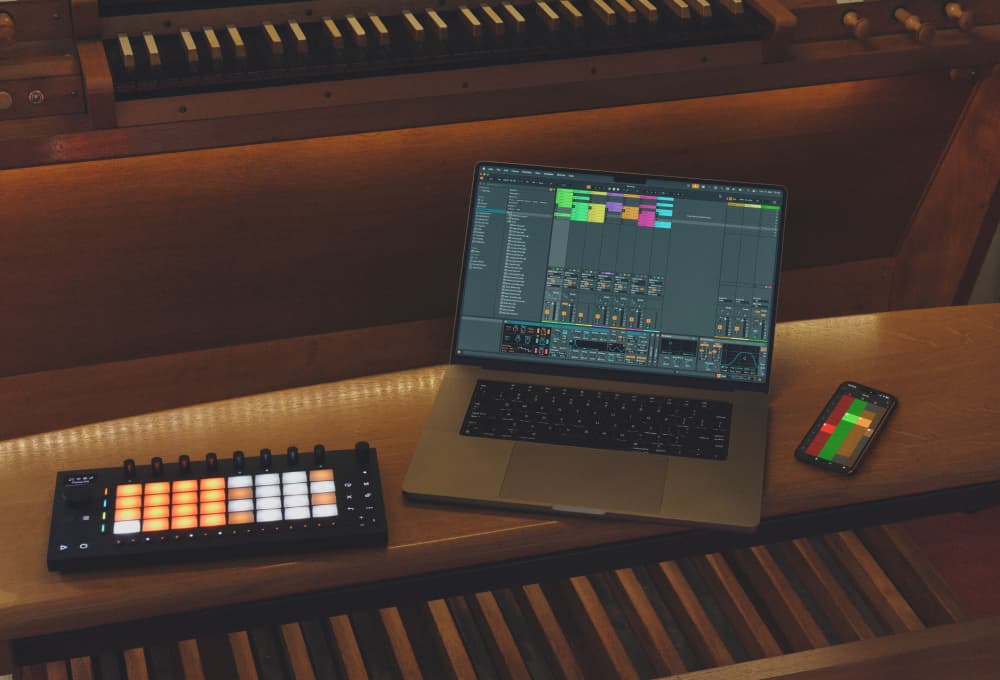
The hardware and software ecosystem takes a qualitative leap with the introduction of Link Audio. This new feature allows for the transmission of multi-channel audio in real time over a local network, completely eliminating the need for additional audio interfaces, physical routing, or manual latency compensation. Producers can now send signals directly from mobile devices with the Note app, or from hardware like Move and Push Standalone, to the main Live session. This advancement facilitates synchronized jamming sessions, allowing audio from other performers to appear as a direct input in the mixer.
Link Audio eliminates the complexity of physical routing, allowing producers to send and receive signals in real time without additional interfaces or manual latency.
— Technological impact of the update
Start playback
Stem Separation: Surgical precision in Arrangement View
Originally introduced in version 12.3 for Suite edition users, the Stem Separation tool receives a critical update. Previously, the artificial intelligence engine required processing entire audio clips, which consumed valuable CPU resources and time. With version 12.4, users can isolate specific time fragments directly in the Arrangement view (for example, extracting only 16 bars of a track). Additionally, the system allows merging the separated stems into a single file; it is possible to extract the vocals from a techno track and consolidate the remaining bass, drums, and synthesizers into a single instrumental track, all monitored through a new unified progress bar.
Evolution in synthesis and effects: Erosion, Chorus-Ensemble, and Delay
The sound design section also experiences substantial improvements. The classic Erosion effect has been redesigned from the ground up to include real-time spectrum visualization and the ability to transition smoothly between noise and sine wave modulation, as well as between mono and stereo noise (the previous version will be kept as 'Erosion Legacy' so as not to affect old projects). For its part, Chorus-Ensemble incorporates new Time and Taps parameters, allowing the emulation of vintage pedals using 'one-tap delay' configurations, a technique ideal for adding analog warmth to bass lines and guitars. Finally, the Delay device expands its modulation palette with new LFO time modes and waveforms.
Hardware updates and the new Learn View environment
The release of Live 12.4 coincides in parallel with significant updates for the brand's physical devices, expanding the autonomy of producers outside the traditional studio:
- Push Standalone: Gains the ability to create, modify, and disable MIDI controller mappings directly from the hardware, avoiding conflicts with custom scripts and expanding control over Max for Live parameters.
- Move 2.0 and Note 2.0: Integration of audio clip recording via microphone or USB-C, support for 'warping' algorithms that maintain pitch when altering BPM, and the inclusion of Auto Shift and Erosion effects. Additionally, they incorporate new demo sets from artists like Heavy Mellow, Alice Ivy, and Jose Castillo.
- Learn View: A redesigned educational system that replaces the old Help View, offering video tutorials in 'picture-in-picture' format and progress tracking to master the DAW's tools.
With this ambitious technical deployment, Ableton not only optimizes tools for mix engineers and artists in the clubbing ecosystem, but also strengthens the interconnectivity of its hardware, bringing professional music production closer to a much more intuitive, fast, and deeply collaborative workflow.