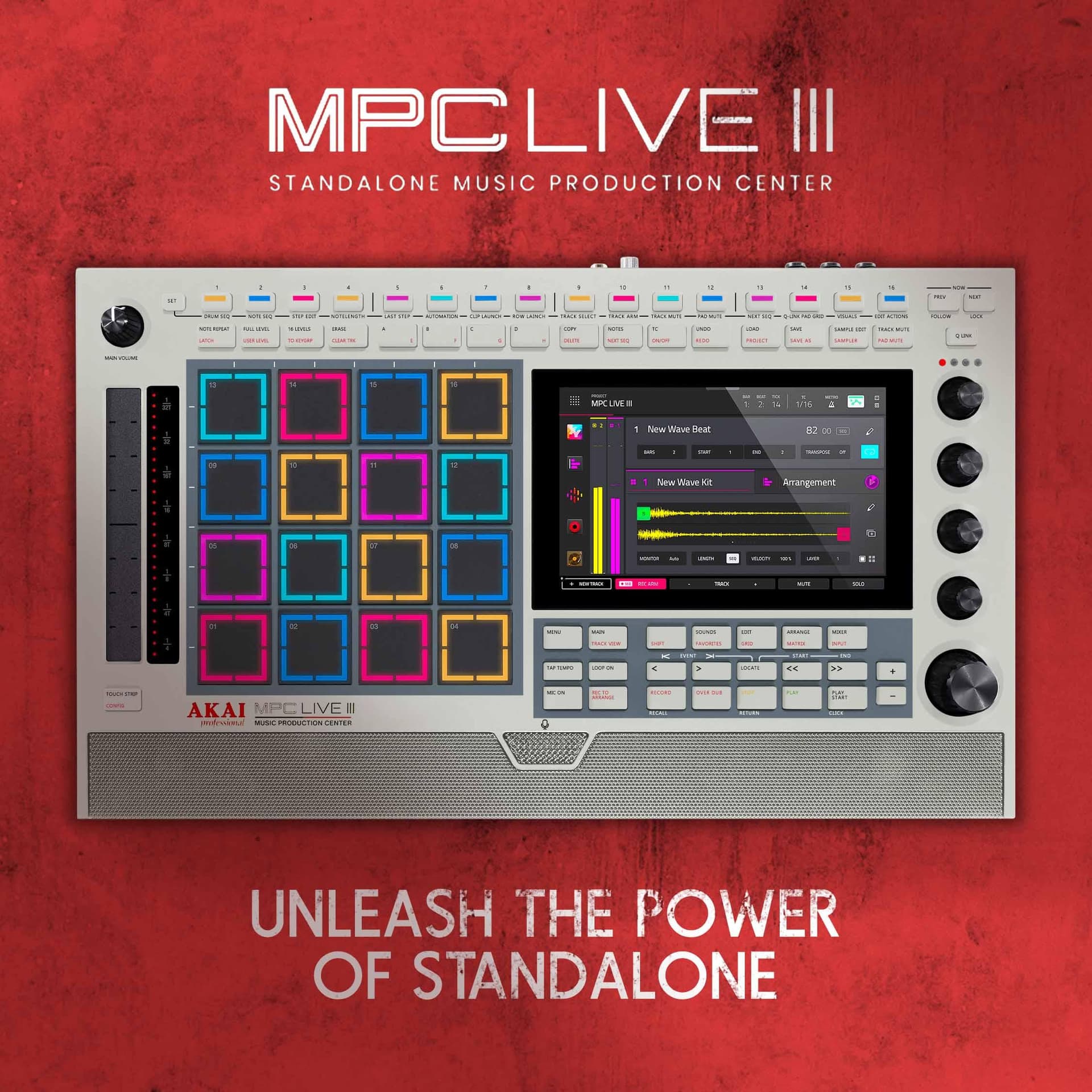

Launch and context of the new MPC Live III Retro
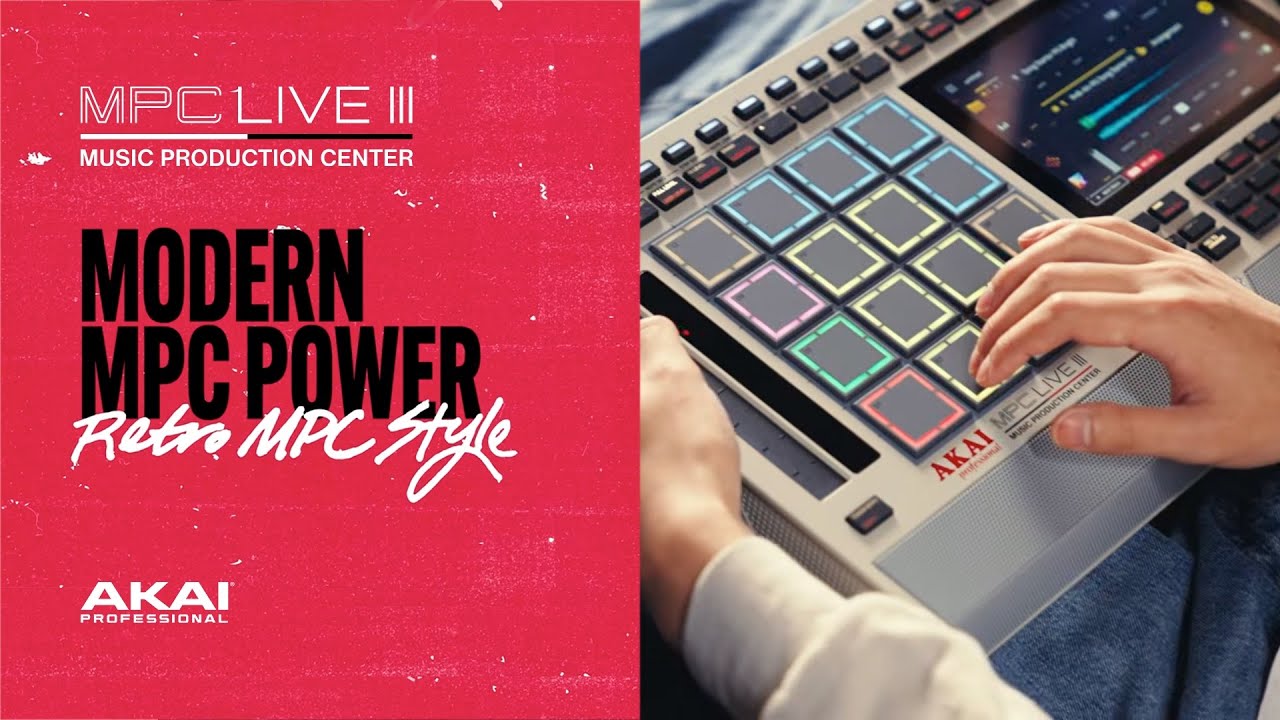
On May 28, 2026, Akai Professional officially announced the availability of the MPC Live III Retro, a standalone music production station. This model merges the latest generation hardware of the Live III series with a chassis that pays tribute to the classic drum machines of the late eighties. The device hits the market with a retail price set at 1,699 dollars.
Technical specifications and hardware architecture
The device's internal architecture features a significant technical upgrade compared to previous generations. The unit is powered by an eight-core MCS II processor and features 8 GB of RAM, accompanied by 128 GB of internal storage. This set of components allows the MPC3 OS operating system to run smoothly without requiring a connection to a computer.
- MPCe pads with 3D detection technology, pressure-sensitive and X/Y motion-sensitive.
- Dedicated step sequencer with 16 physical buttons.
- Integrated software functions such as Pro Stems Separation and Clip Matrix.
- Expanded connectivity with two XLR/TRS combo inputs, eight CV/Gate outputs, Wi-Fi, and Bluetooth.
- Rechargeable battery with up to four hours of battery life, built-in stereo speakers, and condenser microphone.
Start playback
Integration into the modern workflow
In the software section, the inclusion of the MPC3 Pro Pack provides cutting-edge tools for real-time audio manipulation. Highlights include the Super Timestretch algorithm and exclusive plugins developed by AIR Music Technology, including AIR Fabric Select and AIR Reverb Pro. Additionally, the hardware supports streaming up to 24 audio tracks via its USB-C port, which facilitates direct integration with digital audio workstations (DAW).
The standalone format as a standard in electronic live performance
The commercialization of the MPC Live III Retro consolidates the manufacturers' trend toward the 'standalone' format. By eliminating the strict dependence on a laptop on stage, Akai Professional responds to the demands of electronic music producers who prioritize system stability and the tactile response of classic hardware, while keeping contemporary processing capacity intact.