

The Legacy of the Trautonium in the MPE Era
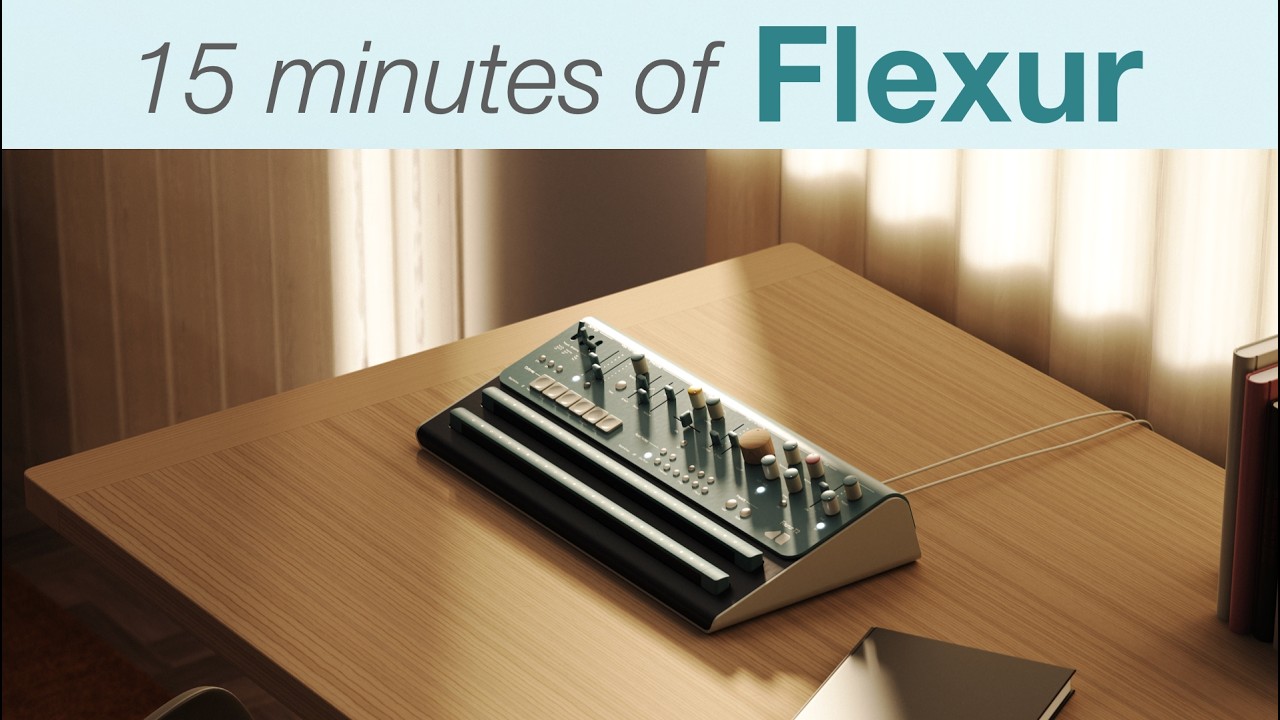
Recently, the hardware firm Sound Workshop has revealed the Flexur T2, an expressive standalone synthesizer that pays homage to the legendary Trautonium, invented in the 1930s. Far from using the classic traditional keyboard, this new device incorporates two floating touch bars that allow for continuous control of volume and pitch. Designed by the engineering team behind the previous Wiggler model, the hardware seeks to merge historical acoustic design with the standards of modern synthesis and advanced sound design.
Synthesis Architecture and Modular Connectivity
On a technical level, the Flexur T2 operates via a subtractive synthesis engine under the strict philosophy of assigning one knob per function. The chassis, with exact dimensions of 450x280x70 millimeters, houses a system capable of managing 23 semitones per touch bar, offering an immersive physical response for the producer.
- 6x12 modulation matrix with two routing paths and dedicated intensity sliders.
- Parallel CV outputs (pitch, gate, envelope, and pressure) oriented toward the control of modular analog synthesizers.
- Polyphonic TRS MIDI connectivity and USB-C with full support for MIDI Polyphonic Expression (MPE) technology.
- Integrated autotune, polyphony, and arpeggiator settings for the creation of complex rhythmic sequences.
Start playback
Impact on the Hardware Production Ecosystem
The marketing strategy underscores the exclusivity of the project. The pre-sale phase has been restricted to an internal production of just 100 units, with the initial goal of raising 75,000 dollars to cover manufacturing costs without relying on external factories. With an estimated distribution window between six and twenty-four months, the Flexur T2 not only democratizes access to a historically complex instrument, but also establishes a direct bridge between cutting-edge engineering and the contemporary demands of the electronic recording studio.