

Farewell to a fundamental sound architect
The electronic music ecosystem has lost one of its primary architects. Patrick Gleeson has passed away at 91, leaving an incalculable legacy that cemented the use of synthesizers in modern production. The news was recently confirmed through an official statement from the Bob Moog Foundation on behalf of his family. The passing occurred on July 19, 2026. He is survived by his wife, Charmaine McClarie, after 34 years of marriage.
From the classroom to the oscillator revolution
Gleeson's trajectory is as atypical as it is brilliant. In the sixties, he worked as a professor of 18th-century English literature at San Francisco State University. However, his curiosity led him to experiment with Buchla systems at the legendary San Francisco Tape Music Center. The definitive turning point came in 1968. After listening to the masterpiece "Switched-On Bach" by Wendy Carlos, Gleeson left teaching, acquired a Moog III modular system, and founded the historic Different Fur Studios.
This bold move positioned him at the epicenter of the technological avant-garde on the American West Coast. At Different Fur, Gleeson mastered signal routing and subtractive synthesis. More importantly, he began to integrate these complex electronic instruments into genres that until then depended exclusively on traditional acoustic and electric instrumentation.
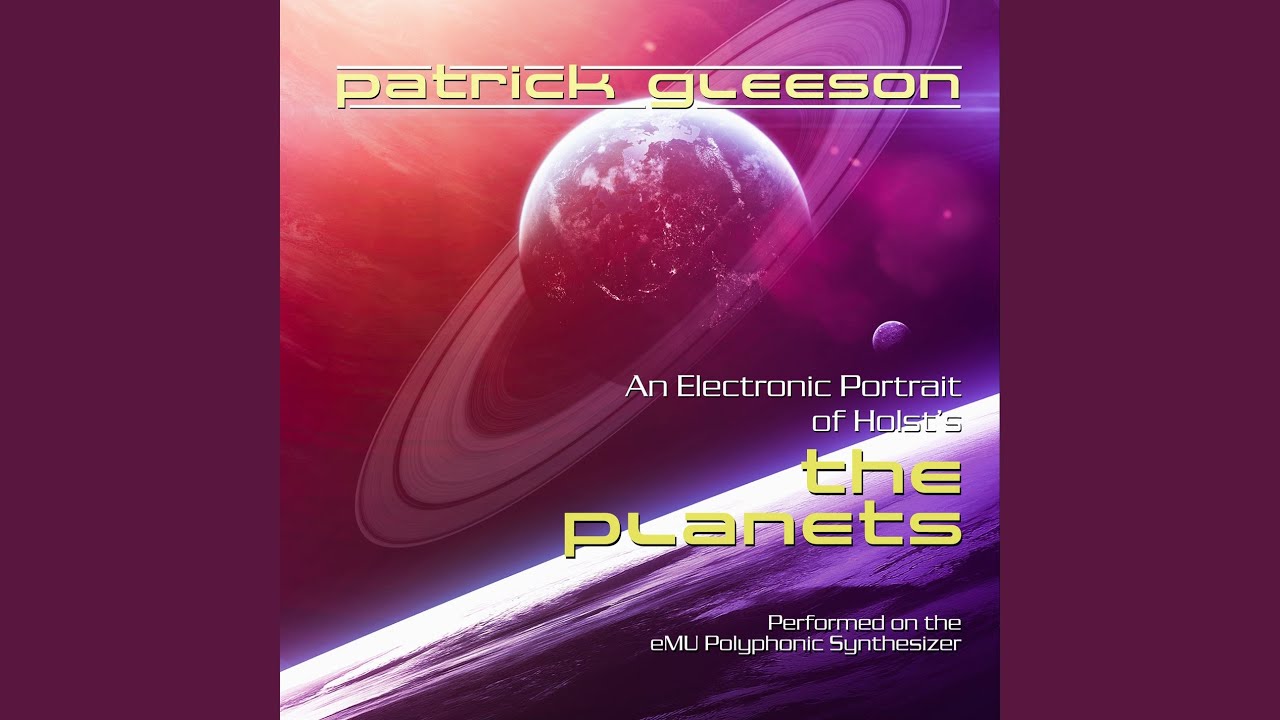
Start playback
Herbie Hancock and the legitimization of the synthesizer in jazz
Gleeson's most visible impact came in the early seventies thanks to his alliance with Herbie Hancock. What began as a job as a synthesizer technician and instructor quickly evolved into making Gleeson a full-fledged member of the band Mwandishi. His work on the seminal albums "Crossings" (1972) and "Sextant" (1973) marked a historic milestone. He demonstrated that the synthesizer, specifically the ARP 2600 and Moog systems, could possess the same groove and expressiveness as a saxophone in a live jazz environment.
Our eight-year wait for someone to explore the realization of electronic music with the proper technical standards and musical taste is over. One hears the ears of a talented musician at work.
— Wendy Carlos
An unparalleled collaborative spectrum
Gleeson's versatility in the studio allowed him to cross stylistic boundaries with astonishing ease. During the seventies and eighties, he operated as a producer, engineer, and programmer for an eclectic list of projects that redefined the sound of their era.
- Production and engineering on the avant-garde jazz fusion of Herbie Hancock.
- Sound engineering on the groundbreaking debut album by the band Devo (1978).
- Technical contribution to the masterpiece "My Life in the Bush of Ghosts" by Brian Eno and David Byrne.
- Sound design and synthesizers for the cult film "Apocalypse Now" by Francis Ford Coppola.
- Grammy Award nomination for his ambitious solo album "Beyond the Sun" (1976).
The eternal pulse in contemporary frequencies
Analyzing the figure of Patrick Gleeson implies recognizing that current club culture and modern production owe much of their DNA to him. Before live setups packed with hardware were the norm at festivals around the world, Gleeson was already dealing with the instability of analog oscillators on stage. He demanded that technology adapt to human emotion, and not the other way around. Although he retired from the audiovisual circuit in 2017, his spirit remained active in tours until his final years. His passing closes a vital chapter, but the waves he generated will continue to modulate the future of sound.