
The tenth anniversary of the hardware mecca
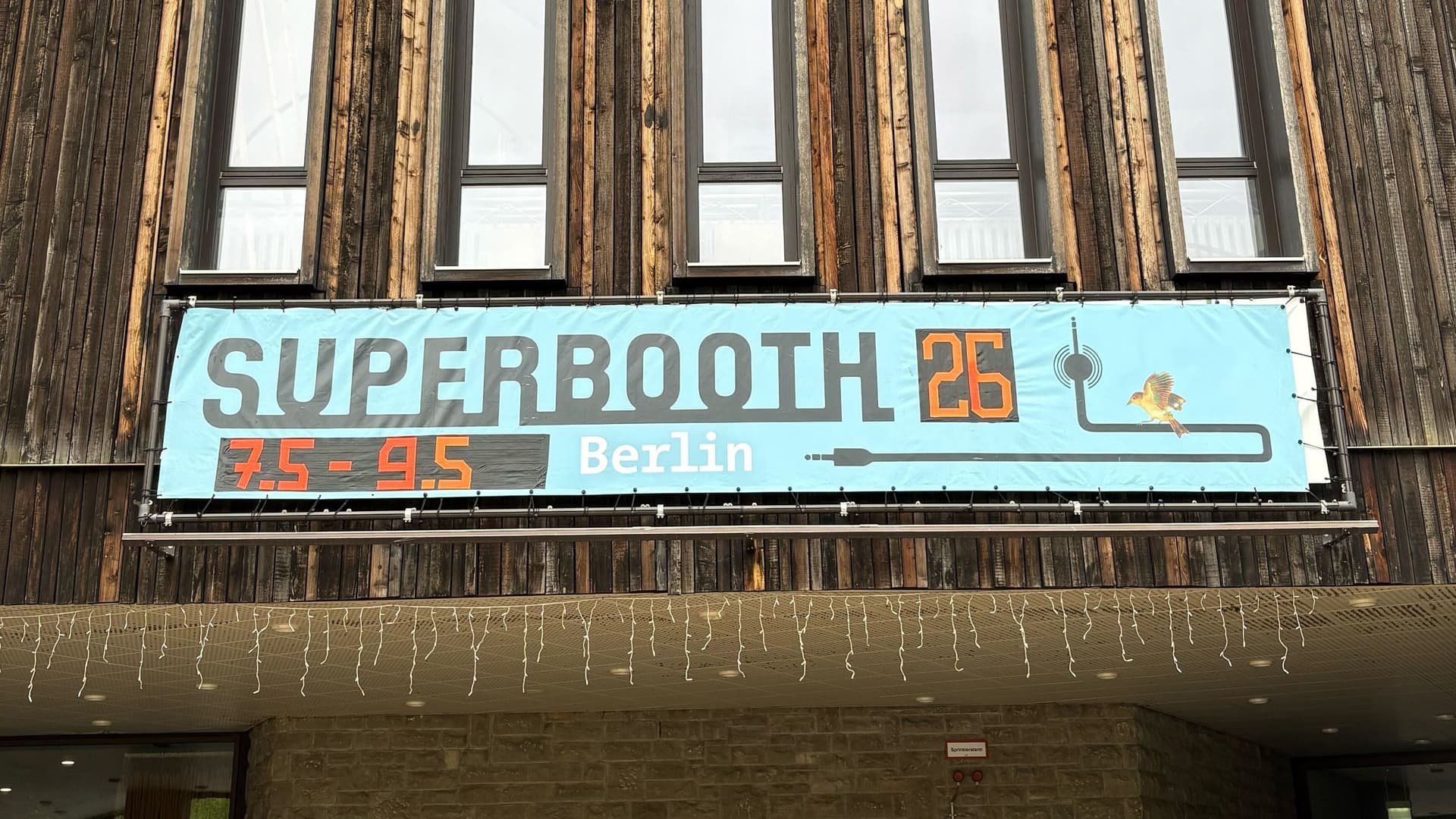
The FEZ cultural complex in Berlin once again becomes the global epicenter of sound production. Yesterday, May 7, Superbooth 2026 opened its doors, the most relevant trade fair for electronic instruments and studio equipment in the industry. This edition marks the event's tenth anniversary as an independent platform, a project founded by Andreas Schneider that was born to give a voice to both corporate giants and small Eurorack module creators. Until May 9, producers, engineers, and sound design enthusiasts will be able to explore firsthand the technological trends that will define the pulse of the club scene and recording studios throughout the current year.
Featured announcements: From Buchla to Korg prototypes
The presentations in this edition cover the entire economic and technical spectrum. One of the releases that has garnered the most attention is the Buchla Ziggy, a desktop analog synthesizer that democratizes the characteristic sound of the Californian brand. With an approximate price of 1,025 euros, this monophonic unit includes a complex oscillator and a lowpass gate, bringing the demanding West Coast synthesis philosophy to a new generation of creators. At the other end of the market, the Italian firm GRP Synthesizer has unveiled the A10, an imposing analog flagship valued at 12,000 euros, destined to be the centerpiece of the most exclusive professional studios.
In the realm of established brands, Korg has generated great anticipation by exhibiting a mysterious five-octave keyboard prototype, deliberately hidden under a plastic tarp in the entrance area. Meanwhile, Modal Electronics has presented the Element One, a 37-key synthesizer designed in collaboration with the renowned Axel Hartmann, whose goal is to simplify tactile interaction with sound. In addition, the Latvian firm Elta Music has surprised with the Polivoks-8, an eight-voice polyphonic prototype that rescues the raw and aggressive character of the legendary Soviet Formanta Polivoks equipment.
Radical innovation: Artificial intelligence and randomness
Beyond traditional keyboards, Superbooth 2026 shines for its experimental proposals oriented toward the creative workflow. The French company Cyma Forma, in collaboration with the renowned DJ and producer Bambounou, has launched the RND. This peculiar 125-euro device lacks screens or navigation menus: it has a single button that, when pressed, generates one of the more than four billion possible random sounds, completely altering the conventional workflow of synthesis.
Likewise, the convergence between cutting-edge technology and musical hardware is evident with Roland's Project Lydia. This effects pedal, developed by its Future Design Lab, uses artificial intelligence models to apply tonal qualities of neural sampling to any incoming audio signal. In an equally avant-garde vein, the studio Eternal Research has brought its Demon Box to Berlin, a production instrument capable of transforming invisible electromagnetic fields present in any room into audio, MIDI, and control voltage (CV) signals.
Technological impact on the electronic scene
The gathering of more than 300 exhibitors from dozens of countries underscores the excellent health of the musical hardware ecosystem. From 16-track sequencers for modular systems like the new Ark from Befaco, to advanced granular sampling tools like the update to the S-4 from Torso Electronics, the novelties presented emphasize live performance and tactile manipulation. This trend reaffirms that, despite the clear dominance of software in modern production, physical hardware remains an irreplaceable engine for boosting creativity, the groove, and the aesthetic evolution of electronic music globally.