

The end of the mouse: context of a revolution in music production
In our newsroom, we have spent decades observing and analyzing the evolution of digital audio workstations (DAWs). Since the dawn of computer music, we have faced a fundamental dilemma: the immense processing power of software versus the biomechanical coldness of the computer mouse and keyboard. Historically, manipulating millimetric parameters in the iconic Session view of Ableton Live required sequential interaction, that is, performing one click at a time, drastically limiting the polyphony of our actions. For electronic music, which thrives on the continuous movement of filters, synthesis modulation, and the mutation of 'groove' in real time, this barrier to entry has always felt frustrating to us. We have realized that, for too long, the producer acted more like a cold office data operator than a musician truly feeling their instrument. The dependence on the click forced us to stare at the screen, completely disconnecting us from the creative trance.
As a direct response to this severe ergonomic bottleneck, we have documented a massive exodus in the industry over the last few years toward production environments known as DAWless (computer-free systems). Many artists have sought refuge in the immediacy of analog drum machines and modular synthesizers, rejecting the laptop entirely. However, from our analytical and journalistic perspective, doing without the unlimited flexibility, advanced routing capabilities, and microscopic precision that Ableton Live provides us never seemed like a definitive solution, but rather a temporary patch. It is exactly here that we have witnessed the emergence of a new category of hardware: cutting-edge physical controllers that do not just send basic MIDI messages, but act as a true bidirectional feedback interface. Now, we can transform our favorite software into a one hundred percent tactile and intuitive instrument, eliminating the mouse from the equation once and for all and merging the analog muscle with the all-powerful digital brain.
Ableton Push 3: Our analysis of the definitive hardware
When thoroughly analyzing the current market options, the gold standard that we have examined exhaustively is, without a doubt, the Ableton Push 3. Designed in-house by the same Berlin engineers responsible for the software code, this hardware presents us with a paradigm of absolute integration. What has impressed us most during our laboratory tests is the native implementation of MPE (MIDI Polyphonic Expression) technology in its renewed matrix of 64 silicone pads. When touching these pads, we no longer send a simple binary on/off signal; we now experience an astonishing sensitivity that captures every millimeter of our fingers' pressure, as well as the micromovements on the X and Y axes. This allows us to apply complex articulations, such as silky vibratos and drastic pitch bends to individual notes within the same synthesizer chord. We have felt, firsthand, how Ableton Live ceases to be a rigid software program to respond with the organicity and expressive touch of a traditional acoustic instrument.
But the real power move we have witnessed with the launch of the Push 3 is its revolutionary Standalone configuration. In our constant reviews of music technology hardware, we rarely find devices that house an Intel NUC processor, ultra-fast SSD storage, and a high-fidelity audio interface integrated under the same chassis. This engineering has fascinated us: it allows us to transfer our heaviest production sessions from the studio desktop computer directly to the controller's internal memory and head out to the performance without needing to carry the laptop. For giants of the scene like Paul Kalkbrenner, and for the thousands of emerging producers who read our pages daily, this emancipation from the classic operating system means the definitive eradication of the fear of computer crashes in the middle of a live set. When we have seen artists operate exclusively with this hardware, we instantly understand that the Mac or PC screen has become history, returning the performer's gaze to their audience.
Push was designed fundamentally to keep you immersed in the musical moment, moving your gaze away from the computer screen so you can truly feel and play your music like a real instrument.
— Gerhard Behles, CEO of Ableton (Official statement on design philosophy)
Akai APC64 and the era of modular customization with Yaeltex
Obviously, our research work requires us to look beyond the closed and premium ecosystem of Ableton. In this sense, we have analyzed with great anticipation the arrival on the market of the Akai APC64. The historic brand of Japanese origin, to which we have always recognized the foundational merit of popularizing the clip-based workflow with its legendary APC40, has decided to take a notable risk in this new model by replacing traditional physical faders with eight capacitive strips or 'touch strips'. When we have slid our fingers across these tactile surfaces illuminated by RGB LEDs, we have realized the surgical precision they offer when controlling quick effect sends or complex volume automations live. Furthermore, we think it is a resounding strategic success that this controller incorporates physical CV and Gate outputs on its rear panel. Thanks to this, we have been able to sequence both Ableton's virtual instruments and our external analog Eurorack modular systems in a completely tactile way, unifying both worlds without touching the mouse even once.
Parallel to the mass production of these industry giants, from our newsroom we have put our radar on a fascinating emerging phenomenon: the current golden age of 'boutique' hardware and custom-designed MIDI controllers. We have fallen hopelessly in love with the disruptive proposals of manufacturers like the Argentine firm Yaeltex. We have spent hours testing their 3D web design platform (The Factory), which allows us to decide the exact and millimetric location of each infinite potentiometer, luminous arcade button, and linear fader, creating a unique physical template that fits like a glove to our own workflow in Ableton Live. When covering the stages of cutting-edge sound festivals like Sónar Festival, we have noticed that the most impressive and organic live setups are usually governed by these custom 'exoskeletons'. These machines cease to be mere generic peripherals to become exclusive author tools that translate the musician's nerve impulses.
The impact on club culture and our editorial conclusion
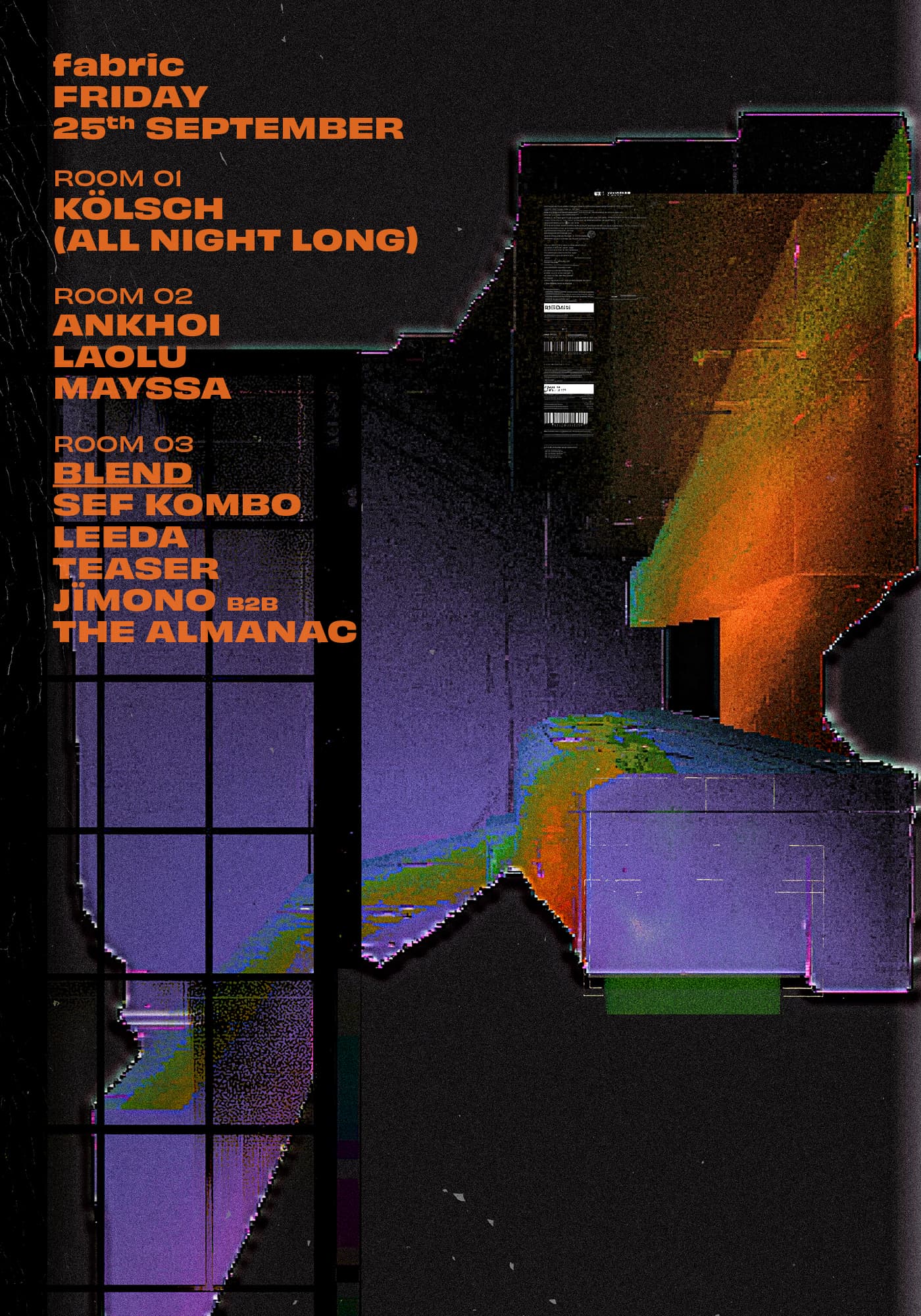
All this immense arsenal of technological innovations that we have broken down has a direct, profound, and vital repercussion on the club culture that we defend so much. When we travel across Europe to report from the trenches of underground techno temples like Berghain in Berlin or Fabric London in the United Kingdom, we notice a drastic paradigm shift in the demands of today's public. Dance floor attendees no longer forgive the DJ or producer in Live format who hides statically behind the illuminated apple of a laptop, appearing to check spreadsheets. By incorporating this new range of physical controllers that make the software independent, we have empirically verified that artists recover the essential physicality of live performance. We see muscle tension, we see body language, we see sweaty hands hitting pad matrices and twisting equalizers at the climax of a track. From our platform, we energetically applaud this evolution that transforms the electronic live act into a spectacle of visceral motor skill.
By way of conclusion, our editorial team is firmly convinced that the era of producing and performing electronic music depending exclusively on the computer mouse is reaching its inevitable and well-deserved end. We are, without a doubt, facing the rebirth of the total tactile experience; a mature stage in which we have stopped adapting our hands to traditional office work to demand that music technology adapt ergonomically to our own physiology. The advanced physical controllers we have analyzed, from the brutal autonomy of the Ableton Push 3 to the custom-made wonders by Yaeltex or the studio versatility of the Akai APC64, have managed to endow computer code with a physical and tangible soul. We will continue to test and analyze these innovative tools closely in the future, as they show us every day that the path forward in music production does not lie in cold screens, but in the buttons that we can feel, press, and touch with blind passion.
Consulted Sources
- Ableton: Official technical documentation, design manifesto, and MPE specifications of the Push 3 Standalone.
- Akai Professional: Official launch press releases and CV/Gate integration manual for the APC64.
- Yaeltex: Official catalog of The Factory components and open-source V2 firmware specifications.