
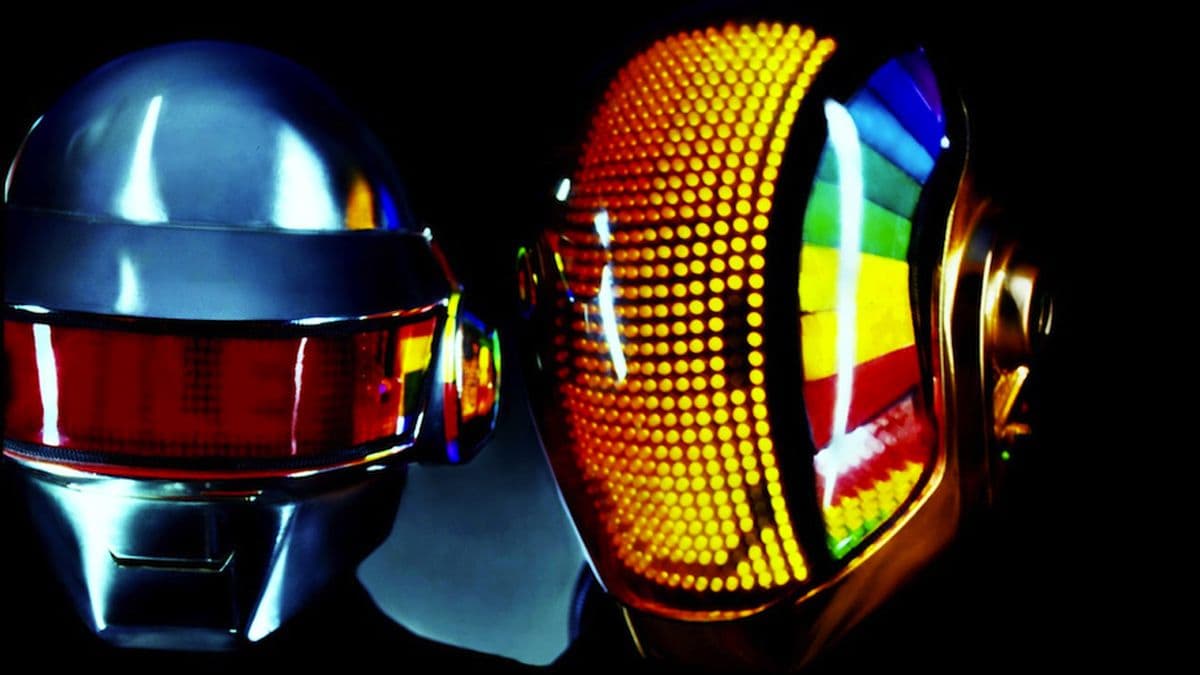

The visual origin of the Human After All era
The legendary French electronic music duo, Daft Punk, has recently declassified a series of historical documents that reveal the initial design phase of their iconic robotic helmets. Through their official archive channels, specifically under the nomenclature of their retrospective series, conceptual sketches and photographs of prototype sculptures dated September 2, 2005, have been made public. This material, developed in close collaboration with the design and special effects studio Alterian, Inc., exposes the rigorous creative and industrial process that redefined the most recognized visual identity in the history of global electronic culture.
The publication of these documents sheds light on a fundamental transition period for Thomas Bangalter and Guy-Manuel de Homem-Christo. Following the overwhelming success of the Discovery era in the early 2000s—where the helmets featured complex LED light matrices, battery packs, and visible external wiring—the year 2005 marked a turning point. The arrival of the album Human After All required a darker, more aerodynamic, and ominous aesthetic, moving away from the colorful celebration of French house to delve into territories of raw synthesis and high-BPM mechanical rhythms.
Technical dissection of the Alterian, Inc. archives
The documents revealed by the official archive offer an empirical look at this hardware evolution. Among the declassified files, a preliminary sketch of a metallic robotic head stands out, accompanied by a sculpture devoid of an outer shell. This piece shows a face formed entirely by an exposed printed circuit board. The visual representation literally materializes the concept of technological assimilation and the premise of the symbiosis between humanity and machine, a central theme in Daft Punk's audiovisual narrative that would later be explored in depth in their avant-garde feature film Electroma in 2006.
- Helmet prototypes with angular visors, eliminating dynamic animation screens in favor of static and opaque surfaces.
- Integral designs for full-body black suits, abandoning the colorfulness of previous stages.
- Ribbed and articulated gloves with textured panels, designed to completely hide human anatomy.
- Detailed diagrams of the rear panels with integrated switches and internal wiring, optimizing mobility in the booth and on stage.
Impact on clubbing aesthetics and enduring legacy
Although the final helmets used in live performances and music videos underwent modifications compared to these early Alterian, Inc. sketches, the DNA of the 2005 design is undeniable. The angular architecture of the jaws, the integration of circuits, and the stylized silhouette laid the definitive foundations for subsequent hardware iterations. These designs became the visual standard during the monumental Alive 2007 world tour, a series of performances that rewrote the rules of stage production in electronic music through the massive use of LED screens and pyramid structures.
The influence of these sketches transcends mere archival anecdote. From the hard-hitting rhythms of the mid-2000s to the acoustic and analog sophistication that earned them multiple Grammy awards with Random Access Memories in 2013, the image of the robots remained imperturbable. The lines drawn in September 2005 endured until February 22, 2021, the date the duo announced their final separation through an audiovisual epilogue. The current revelation of these documents provides the music industry with a valuable historical record of how industrial design and club music can merge to create modern mythology.
The conceptualization of the helmets in 2005 documents the exact moment when Daft Punk's aesthetic transitioned toward the total assimilation of the machine, establishing the definitive visual standard for contemporary electronic music.
— Alterian, Inc. Documentary Archive