

The sunset of Left-Right: Acoustic context of major festivals
From our trenches, behind the FOH (Front of House) desk and scrutinizing spectrum analyzer screens, we have been warning of an insurmountable physical limit for decades. Historically, the culture of major electronic music festivals has been built on the tyranny of the traditional Left-Right (L/R) stereo system. For us, as systems engineers, sound designers, and self-confessed audio purists, observing sixty thousand souls in front of a massive main stage has always meant having to accept a harsh psychoacoustic reality: only a marginal percentage of the audience, those located in the narrow central corridor known as the 'sweet spot', experiences a faithful stereo image and a minimally coherent phase. The rest of the vast dance floor has spent years settling for a jumble of frequencies canceled by comb filtering and a collapse of the soundscape toward the line array closest to them.
This authentic stereo dictatorship, imposed by the technical and logistical limitations of PA (Public Address) hardware over the last three decades, has begun to crumble definitively and irreversibly in this 2026 season. The titans of sound reinforcement have crossed the technological Rubicon, moving spatial audio architectures, which until now lived comfortably secluded in sophisticated Dolby Atmos post-production studios and elitist sound art installations, to the mammoth esplanades of outdoor events. Undeniably cutting-edge festivals like Sónar and global logistical titans like Tomorrowland are already implementing infrastructures that fundamentally alter the operational paradigm: in the electronic scene, we no longer mix audio channels, we now mix physical sound objects in a real three-dimensional environment.
Technical analysis: Spatialization algorithms and object-based audio
When we dissect the ins and outs of this revolution from the DSP processing rack, we find that this tectonic shift is led by brutally powerful rendering engines, highlighting L-Acoustics' L-ISA technology and d&b audiotechnik's Soundscape (DS100) system. We no longer operate by sending one bus to the left and another to the right. We are entering the era of Object-Based Audio. In our most cutting-edge configurations this season, we replace the two classic giant speaker clusters on the sides of the DJ with a panoramic frontal matrix (Scene). This configuration usually consists of five, seven, or even nine line arrays distributed homogeneously along the entire width of the stage, complemented by perimeter boxes for surround effects spread throughout the venue.
The algorithmic black magic happens in the central processor. This machine calculates at the speed of light the exact time delays and amplitude differences necessary for a Roland TR-909 hi-hat or a synthesized snap, virtually positioned to the "left-center", to sound acoustically projected from that physical position for practically any clubber in the venue, destroying the dependence on the 'sweet spot'. For us, sitting in front of the desk's routing matrix, this is a revelation: signal decorrelation expands the spatial width in an overwhelming way. The sub-bass (sub) and the kick drum no longer have to engage in a fight to the death for the frequency space of the phantom center. Now there is a tangible spatial volume to accommodate the harmonic textures of synthesizers and drum machines, achieving a separation, intelligibility, and headroom that simple L/R summation never allowed us to reach.
In large-format venues, stereo is not an aesthetic format, it is an obsolete acoustic compromise. Mixing by objects returns to us the purity of phase and the fidelity of live performance.
— Statements from systems engineers certified in L-ISA and Soundscape technologies
Impact on workflow: From the crushed file to the multichannel booth
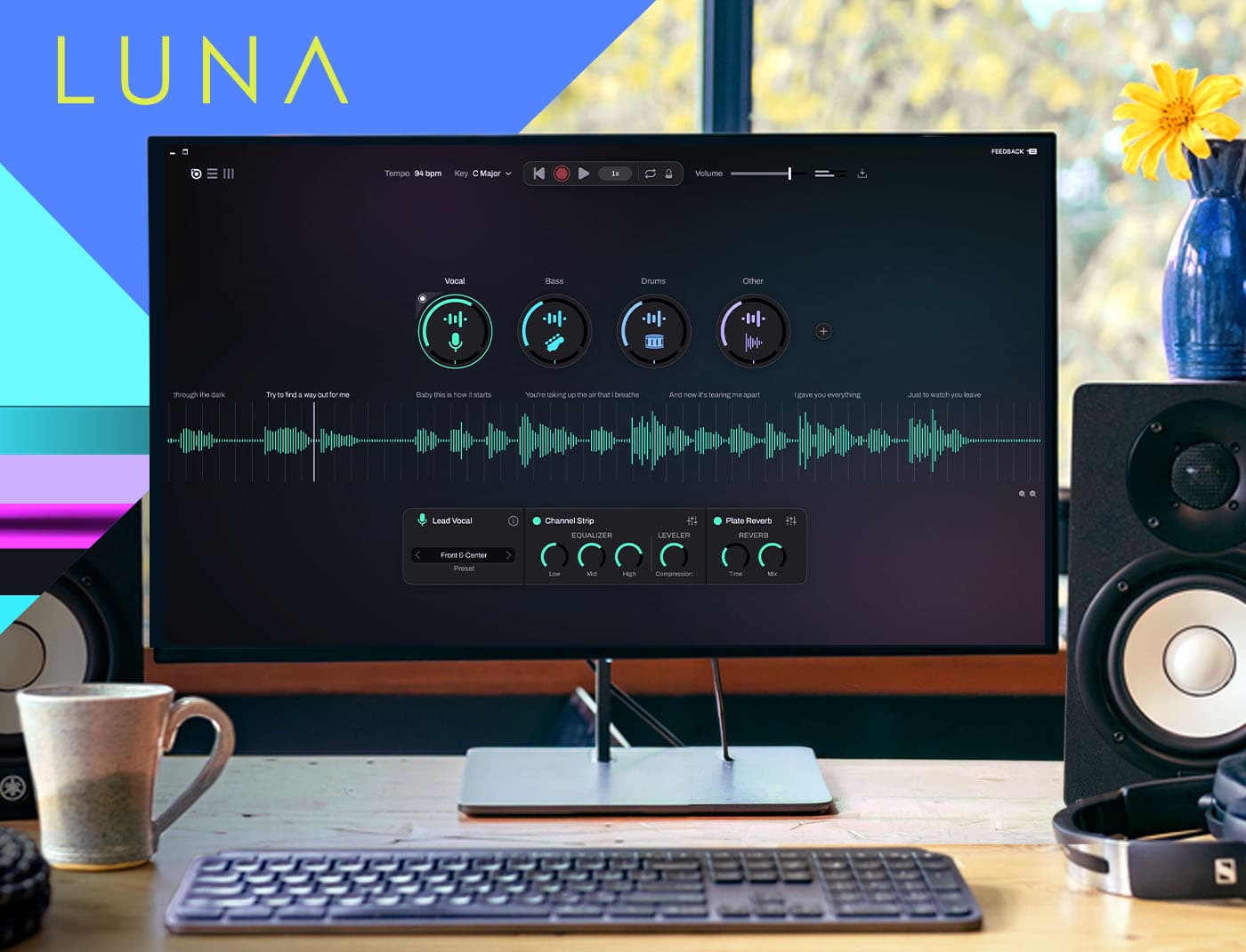
This metamorphosis in sound system design is causing, by pure domino effect, a forced evolution in the artists' live setups. As technological auditors of the scene, we confirm that playing a hyper-compressed stereo WAV master at -5 LUFS and spitting it out into a million-watt immersive system is the equivalent of projecting a VHS on a state-of-the-art IMAX screen. The most avant-garde DJs and producers in our circuit, big names like Richie Hawtin or Dixon, have long been adapting their workflows to this new three-dimensional reality. New generation mixing consoles and processors that assimilate Stems powered by Artificial Intelligence in real-time allow front-of-house engineers to take direct multichannel outputs (drums, bass, melodies, vocals) and begin to spatialize them dynamically throughout the tent.
The impact is even more severe and exciting for artists who deploy hybrid formats or machine-based Live Acts. Artists who load the stage with Elektron sequencers, walls of modular synthesis in Eurorack format, or DAWs like Ableton Live are integrating native plugins into their sessions that send positioning metadata directly to the PA engine via the OSC (Open Sound Control) protocol. A filter sweep of an analog synthesizer not only changes timbre, but physically "flies" in circles over the audience's heads. Giant promoters like Awakenings or the immersive super-productions of festival brands like elrow are fully aware that this generates an unprecedented level of psychoacoustic immersion. By radiating acoustic energy from more independent sources instead of concentrating it in two massive towers, we radically reduce acoustic stress (localized SPL), mitigating temporary deafness and auditory fatigue without losing the chest pressure that industrial techno demands.
Editorial conclusion: The new non-negotiable standard for the industry
Synthesizing our technical analysis and observing the roadmaps (technical riders) of the current season, from this editorial office we declare that the monarchy of Left-Right has died in elite electronic events. It is undeniable that the operating costs are painful: hanging seven frontal arrays requires structurally redesigning the stages, doubling the load on rigging motors (hoists), and undertaking a monstrous investment in Class D amplification channels and network electronics (Dante / AVB). For any independent production company or medium-sized festival, it is a financial leap that causes vertigo. However, in a market saturated with clonic lineups, indisputable acoustic superiority has once again emerged as the ultimate competitive advantage.
As we advance through 2026, the high-level clubber and electronic music lover no longer tolerate paying hundreds of euros for VIP passes if the frontal sound fades with a gust of lateral wind. Impeccable synesthetic immersion is demanded. The systematic adoption of immersive spatial audio in the global festival ecosystem represents the greatest milestone in electroacoustic engineering since music moved from mono to stereo format in the middle of the last century. We will continue to trudge through the mud, calibrating measurement microphones, and auditing every room and every Line Array system, but the empirical verdict is unshakeable: the future of clubbing sound is not listened to passively in front of a stage, but is inhabited, breathed, and envelops you from all vectors of space.
- Official technical documentation of L-ISA (L-Acoustics) and Soundscape (d&b audiotechnik).
- Articles and white papers on acoustics from the Audio Engineering Society (AES).
- Empirical analysis of technical riders for the 2026 European festival season prepared by our editorial staff.