
Echoes of BPM in the festival summer
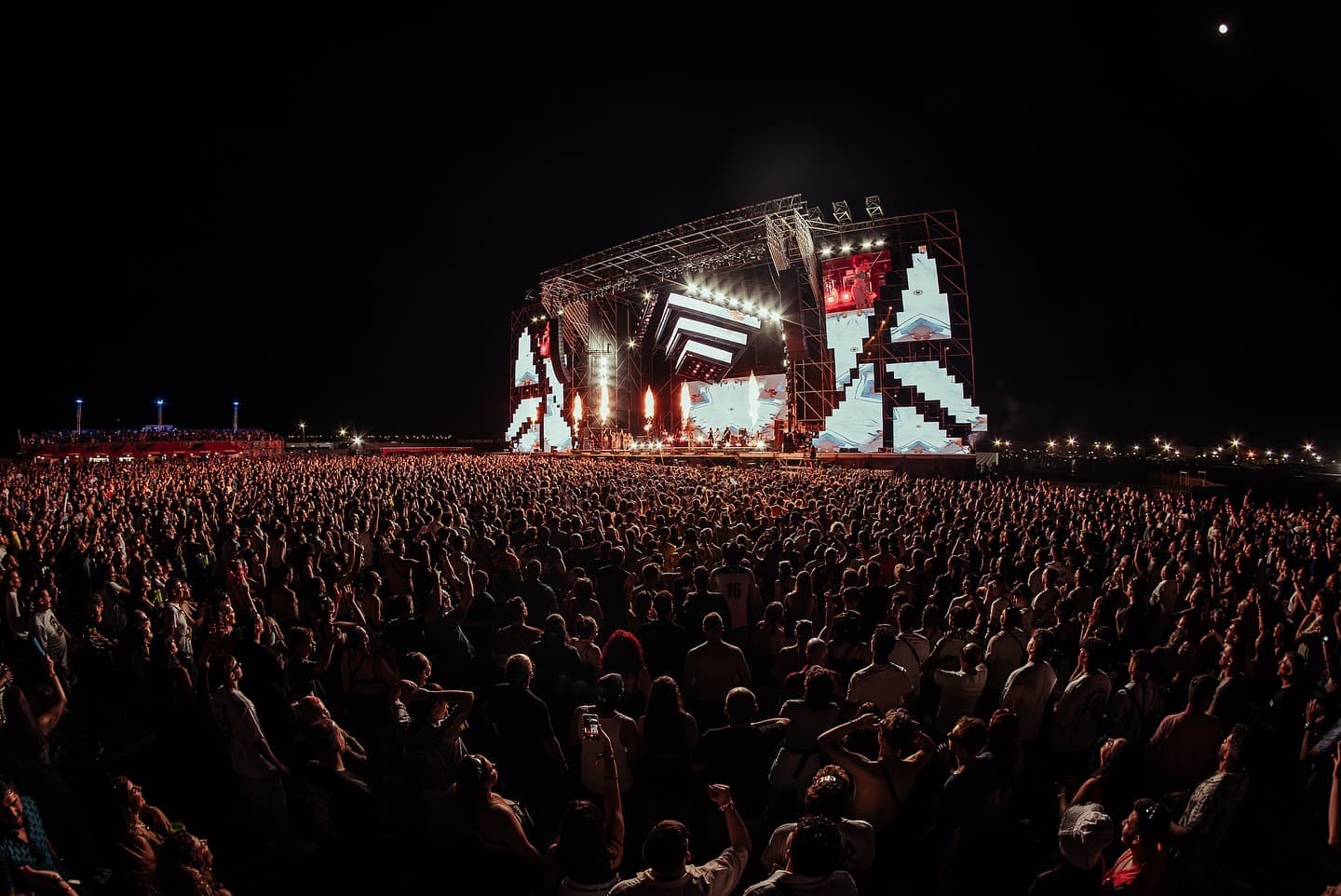
We find ourselves in the middle of July 2026, and the sweltering heat of the peak festival season seems to have moved entirely into the spheres of digital debate. Over the last forty-eight hours, virtual communities like r/techno have been burning with a discussion that, while not entirely new, has reached an unavoidable boiling point. We are talking, of course, about the metamorphosis of hard techno: from its historical condition as a dark and accelerated redoubt to its current status as the undisputed mass phenomenon of global electronic music. As veteran observers of this culture, it is fascinating to contemplate how the dance floor has transformed into an agora where two seemingly irreconcilable visions collide regarding what it means, or should mean, to congregate in front of speakers.
The trenches of this dialectic are clearly defined. On one hand, we are witnessing a wave of unquestionable fervor. Those who defend this explosion of dizzying rhythms argue, with a logic that is hard to ignore, that the scene urgently needed an injection of vitality. For this new generation, hard techno at over one hundred and fifty beats per minute is not an acoustic aberration, but a rite of passage, an overwhelming gateway into the vast universe of electronic culture. They point out, and with some reason, that extreme purism often disguises itself as elitism, erecting invisible barriers that contradict the inclusive spirit that supposedly cemented our origins. From this perspective, massification is simply the symptom of a genre that breathes, evolves, and resonates with the emotional urgency of contemporary youth.
The choreography of the lens and the dark uniform
However, as we enter the gloom of the dance floor, it is impossible to ignore the shadows cast by this new era. The most incisive criticism, and the one with which many of us deeply empathize from this platform, is not directed so much at the speed of the beat, but at the aesthetic colonization driven by social media. The emergence of platforms focused on ephemeral imagery has fostered unprecedented visual uniformity. We observe seas of attendees dressed strictly in black, hidden behind sunglasses in closed venues, more concerned with recording the exact moment of the predictable 'drop' than with immersing themselves in the sensory experience. The phone camera has replaced eye contact, and spontaneous choreography has given way to the calculated pose for the screen.
This digital performativity carries an unavoidable musical cost. Underground techno, in its purest essence, was always a vehicle for hypnosis, a sonic journey built on subtle repetition, communal warmth, and the patient development of the 'groove'. By prioritizing the immediate impact and instant gratification demanded by current algorithms, we run the risk of stripping the genre of its narrative depth. Sets are transformed into frantic successions of climaxes without resolution, where subtlety is sacrificed on the altar of visual spectacularity. It is this loss of shared vulnerability, that magical instant where one forgets oneself and one's appearance to merge with the crowd, that those of us who have inhabited these spaces for decades truly lament.
The fragile balance between evolution and essence
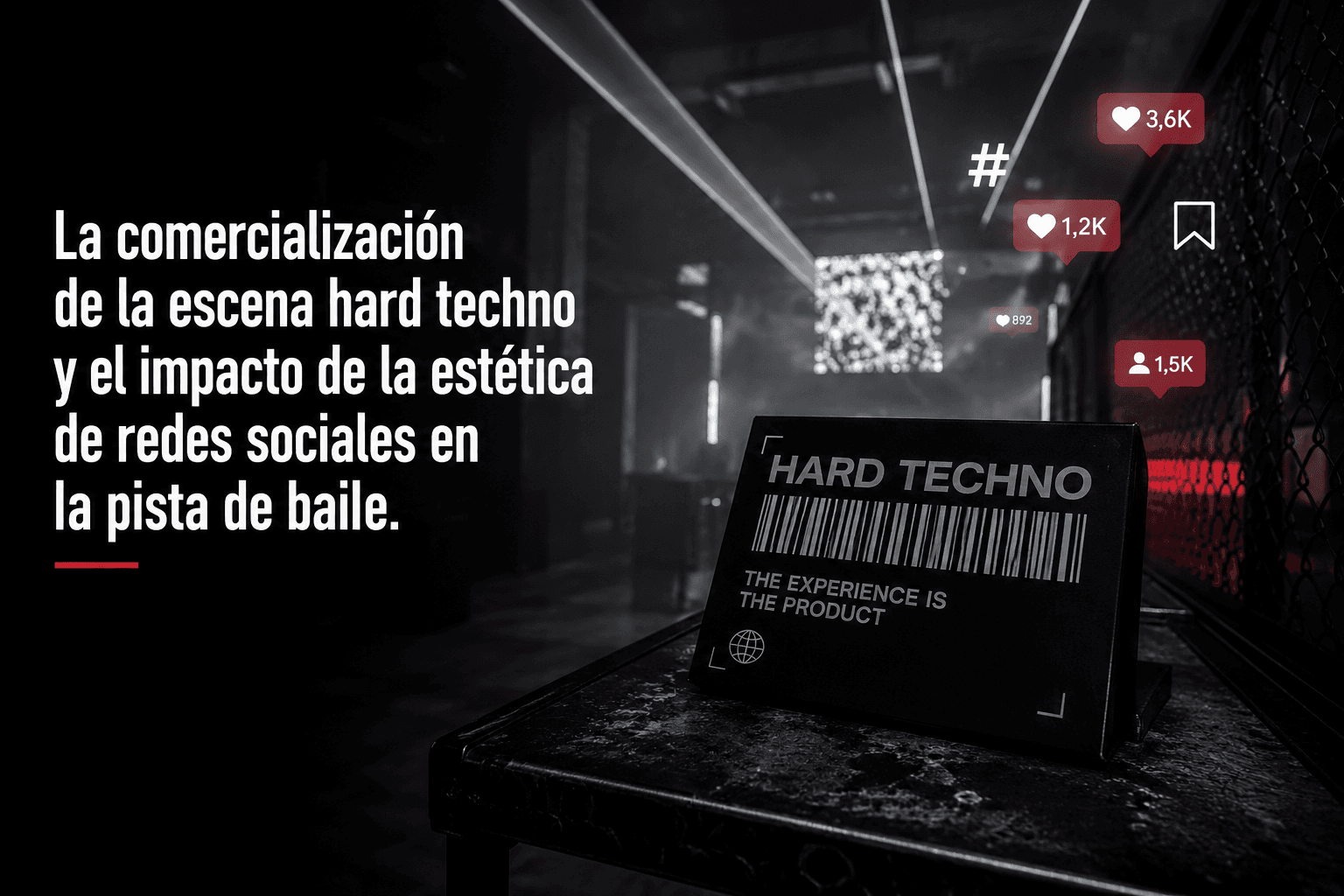
Taking a position in this debate requires an exercise in intellectual honesty. Categorically rejecting any musical evolution for the mere fact of being popular is an exercise in fruitless nostalgia. Electronic music has always advanced through the constant friction between the avant-garde and the mainstream. However, it is our editorial duty to point out that the current commercialization of hard techno presents an unprecedented challenge: the commodification of attitude. When aesthetics devour content, club culture runs the serious danger of becoming a theme park of itself, an empty imitation of the original rebellion packaged for quick consumption.
We firmly believe that the real problem does not lie in the BPM, but in the artistic and receptive intention. A set at one hundred and sixty beats per minute can be a deeply transcendental experience if it is guided by mastery and respect for the listener. The conflict arises when speed is used as a mere illusionist trick to mask a lack of ideas, or when the dance floor ceases to be a safe haven for free expression and becomes a film set. Musical education and civility in the club are not elitist concepts; they are the fundamental tools that guarantee the survival of our ecosystem against the voracity of ephemeral trends.
Horizons beyond the algorithmic frenzy
As we move through this summer of 2026, it is evident that the scene is at a fascinating crossroads. The current polarization, far from being a symptom of irremediable decay, shows that the passion for techno continues to beat with unusual strength. Heated debates in forums and discussions at the doors of clubs are irrefutable proof that we still care deeply about the direction our culture is taking. Perhaps the answer does not lie in direct confrontation, but in the creation and fostering of alternatives. While macro-festivals embrace the high-speed spectacle, we are already observing how the true underground is intelligently retreating, seeking more intimate spaces, limiting the use of mobile devices, and reclaiming the return to dancing as an act of intimate and collective resistance.
Ultimately, the vast history of electronic music teaches us that every massive wave eventually recedes, leaving behind a valuable sediment of new acolytes who, with time and curiosity, will seek more complex and profound sounds. Our responsibility as critics, analysts, and promoters is not to close the door to new generations, but to invite them to look beyond the glass of their screens. We must show them, with patience and rigor, that the true magic of techno does not lie in the uniform darkness of the clothing or the predictable brutality of the kick drum, but in the ineffable connection that arises when, finally, we put the phone away, close our eyes, and allow the rhythm to guide us back to our most human essence.