
The mirage of digital connection
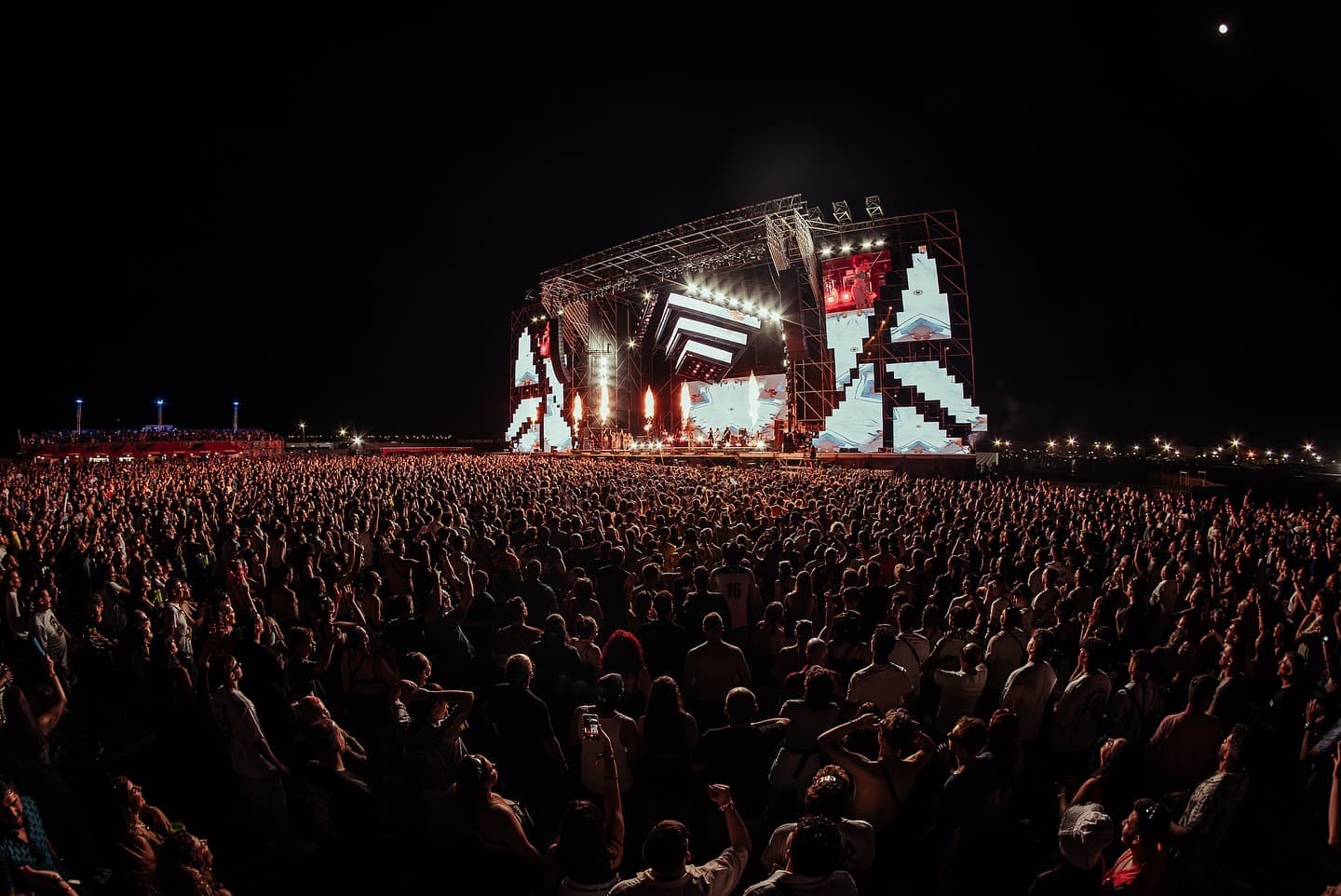
I write these lines while the echo of the bass from Stone Techno Festival 2026 still resonates in our collective memory. Unfortunately, it seems that what reverberates most in debate forums today is not the technical skill of the selectors, but the incessant flash of screens. In the last forty-eight hours, social media has become a hotbed of conflicting reflections. We have witnessed overcrowding that defies the logic of comfort, accompanied by choreography that responds more to the viral aesthetics of TikTok than to the catharsis that has historically defined our culture. We find ourselves at a fascinating and, at the same time, deeply worrying crossroads for those of us who have inhabited the shadows of the club for decades.
It is no secret that underground electronic music has mutated. What once represented a refuge for dissent, a sacred space where anonymity was the norm and disconnection from the outside world was the primary goal, today often presents itself as an open-air film set. Calculated poses, inspired by aesthetics such as those of the BCCO collective, have largely replaced free and uninhibited dancing. However, before falling into the trap of blind nostalgia, it is our duty as analysts to dissect this phenomenon with the coldness and rigor it demands, understanding that every cultural transformation brings with it unavoidable lights and shadows.
Democratization versus commodification
It is undeniable that massive visibility offers strong arguments. New generations, wielding their devices as windows to the world, fervently defend that virality democratizes a scene that, at times, was guilty of being hermetic and elitist. Digital platforms have injected renewed energy, attracting thousands of neophytes who discover techno through a video of barely fifteen seconds. Furthermore, from a purely pragmatic perspective, this hyper-visibility guarantees economic sustainability. It is precisely this injection of capital, derived from massive ticket sales, that allows promoters and festivals to hire world-class figures and design pharaonic audiovisual productions. Without this financial muscle, many of the events we celebrate today simply would not exist.
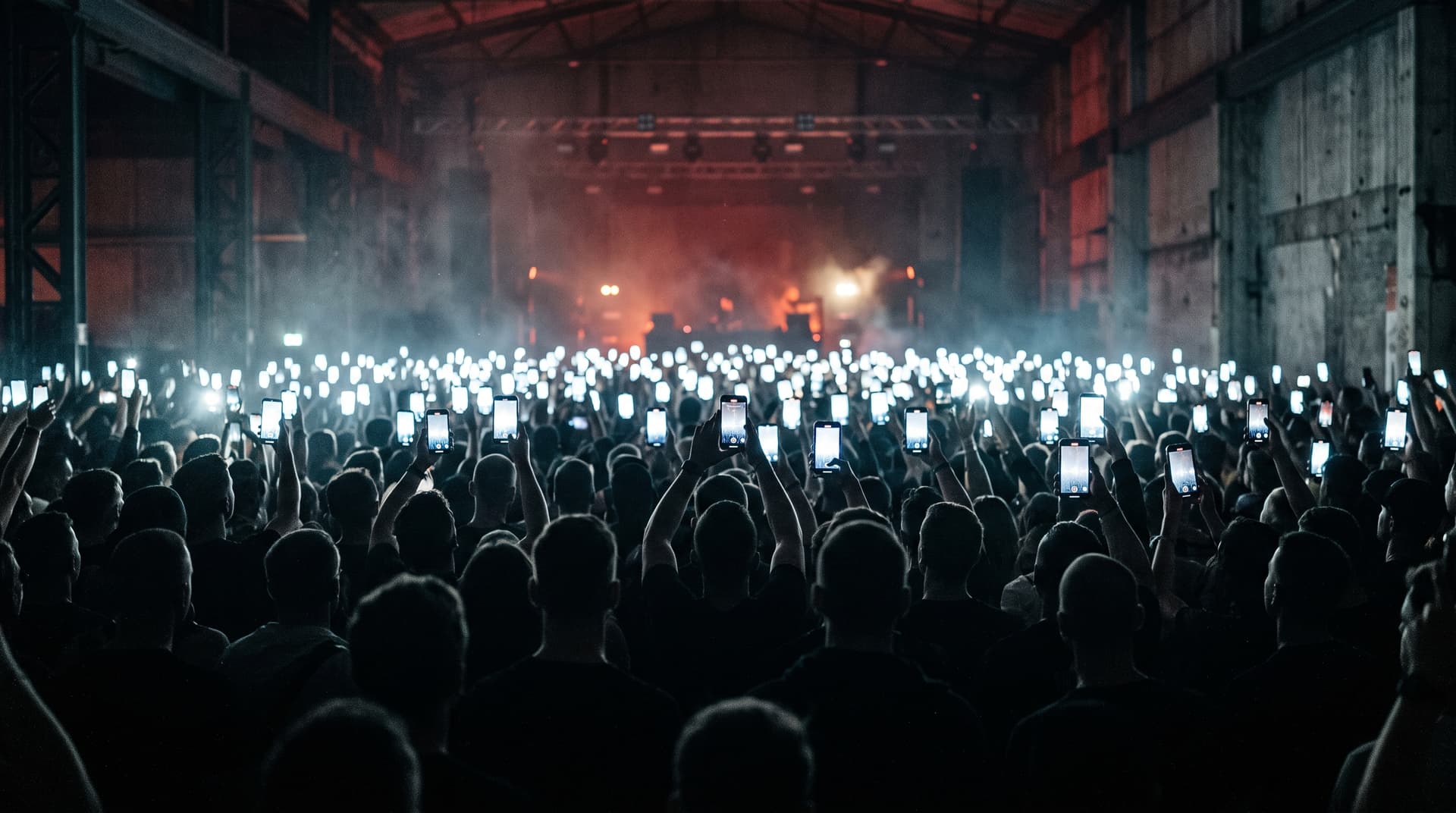
At the opposite extreme, veterans of rave culture raise their voices with unquestionable legitimacy. The overselling of capacity, driven by the corporate desire to maximize profit margins, is gradually eroding the physical space necessary for bodily expression. When the dance floor becomes a sea of static bodies, concerned only with holding the phone at the perfect angle, the pact of respect and communion that gives meaning to clubbing is broken. The complaint is not born of snobbery, but of the palpable loss of an atmosphere that requires intimacy and absolute presence. The deep connection with the music is diluted when the experience is lived through the filter of a screen, transforming the active participant into a passive spectator.
The price of hyper-visibility
From this platform, we observe the current landscape with a mixture of fascination and caution. We understand the need for evolution; techno has always looked to the future and embraced technological advances. However, we firmly believe that uncontrolled massification and the obsession with digital validation are distorting the original purpose of these spaces. Extreme commodification, skillfully disguised as democratization, runs the risk of turning a vibrant counterculture into a product of fast and ephemeral consumption. When the promoter prioritizes the sale of the last ticket over the comfort and safety of the attendee, a line is crossed that compromises the very integrity of the event.
The fundamental problem does not lie in the arrival of new audiences, whom we must always welcome with open arms, but in the imposition of a code of conduct that prioritizes aesthetics over substance. Club culture is, in its purest essence, an exercise in empathy and collective liberation. If we allow digital narcissism to dictate the rules of the floor, we will be sacrificing the last bastion of genuine freedom we have left in contemporary society. It is imperative to demand an ethical responsibility from organizers that manages to balance financial profitability with the preservation of the ritualistic experience.
Towards a new pact on the dance floor
Looking to the horizon, the challenge we face as a community is not to eradicate technology at the root, but to learn to live with it without it devouring our own identity. Stone Techno Festival 2026 must serve as a necessary turning point, a critical mirror in which to look at ourselves and ask what kind of scene we want to inherit and bequeath to future generations. Perhaps the solution lies in promoting camera restriction policies more rigorously, or in redesigning physical spaces so that the focus of attention returns to the booth and the fidelity of the sound system, moving away from the front camera lens.
Ultimately, the survival of the true spirit of techno will depend on our collective ability to re-educate ourselves. We must remember, and teach with patience to those who have just arrived, that true magic happens when we close our eyes, put the phone in our pockets, and allow the sub-bass frequencies to guide our movements in the dark. Only then will we ensure that the dance floor remains that unassailable sanctuary where we are all equal under the strobe light, oblivious to the relentless dictate of the algorithm and surrendered, purely and exclusively, to the transformative power of music.