
This July 1st, 2026, marks an unavoidable turning point for the electronic community. The summer festival season, historically celebrated as the zenith of the European scene, seems to be melting before our very eyes. The recent last-minute cancellations of titans like Defqon.1 in the Netherlands and Solidays in Paris, under the threatening shadow of 'code red' weather alerts for extreme temperatures, have forced us to face a very uncomfortable reality. We are witnessing a paradigm shift where the relentless climate crisis dictates the BPMs, leaving thousands of attendees adrift and a multi-billion dollar industry in a state of shock.
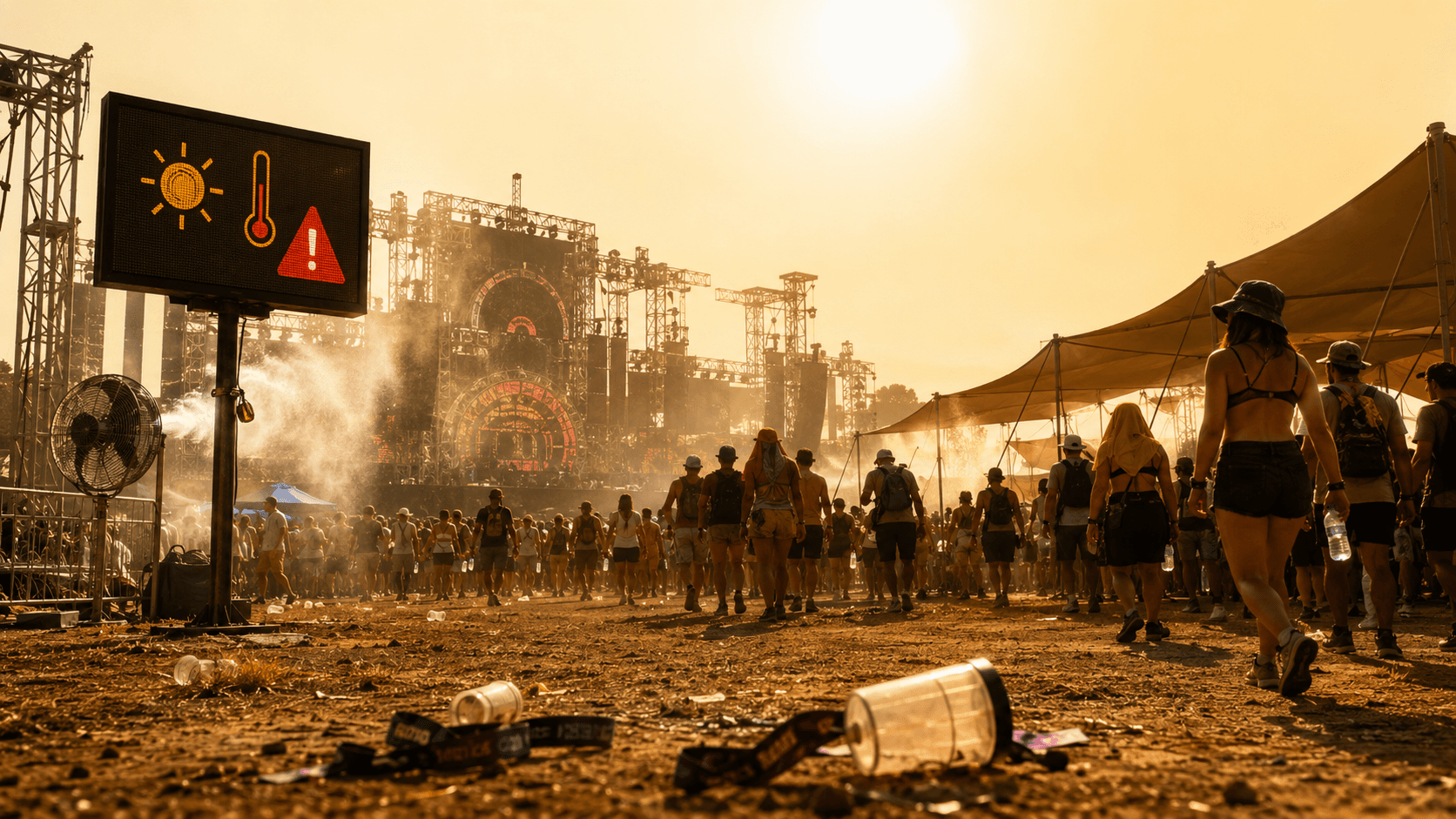
From this platform, we have always defended the dance floor as a sanctuary, a space for collective liberation. However, trying to maintain the cadence at 150 BPMs under a heat index of 44 °C transforms that sanctuary into an imminent biological hazard. The romanticized image of the raver dancing under the summer sun is violently colliding with the harsh reality of medical emergencies and extreme exhaustion, forcing authorities to shut down sound systems abruptly and preventively.
The sunset of the traditional summer
On one side of this heated debate, we find a growing chorus of attendees and safety advocates who applaud these preventive cancellations as ethical and responsible decisions. From our analytical perspective, it is undeniable that human well-being must take precedence over hedonism. This sector rightly demands a comprehensive redesign of the experience: they suggest the permanent relocation of macro-events to spring or autumn. Furthermore, they demand strict regulations that force promoters to invest in high-capacity acclimatization areas, the gradual elimination of heavy metal structures that act as solar ovens, and the unconditional distribution of free water on all stages.
At the opposite extreme, a significant part of the community—composed of die-hard ravers and independent cultural promoters—expresses deep and understandable frustration. We cannot ignore the economic disaster it represents for those who invest their savings in non-refundable flights and accommodation, only to find the doors closed at the last minute. This group argues that authorities and large conglomerates prefer the easy path of sudden cancellation instead of proactively investing in truly effective cooling infrastructure. For them, banishing festivals from summer would not only destroy the intrinsic mystique of the summer season, but would deal a lethal financial blow to countless independent projects that depend vitally on this seasonal window to survive.
The inertia of a dehydrated industry
This is where we must stop and reflect sharply. I think the industry has been guilty of a dangerous inertia, clinging to a business model designed for the benevolent climate of the nineties. It is imperative to question whether the stubbornness to keep the summer calendar intact responds to a true devotion to club culture or to mere corporate convenience. Promoters cannot continue to externalize climate risk onto the attendee. Last-minute cancellation, while medically justified in the current scenario, denotes an abysmal lack of strategic planning that erodes public trust.
If we want the scene to survive without sacrificing its essence or putting the physical integrity of its community at risk, we must demand architectural and logistical innovation. It is no longer enough to install water misters or insufficient shade tents; we are talking about rethinking the very morphology of the outdoor festival. We firmly believe that moving these events to September or October would not dilute the magic, but could inaugurate a new golden age of outdoor clubbing, free from the terror of thermal collapses. The mystique of a festival does not reside in the month marked on the calendar, but in the communion of sound, space, and the collective spirit.
Towards a new sonic calendar
The logistical collapse of Defqon.1 and Solidays this 2026 must be read not as a passing anomaly, but as an ultimatum from our ecosystem. We face the inescapable need to evolve. The resilience of the underground electronic music scene has always lain in its ability to adapt in the face of adversity and counterculture. Redesigning the European festival experience will require short-term economic sacrifices and an iron will on the part of institutions and promoters to prioritize human life over the traditional aesthetics of the months of July and August.
Ultimately, the survival of our beloved dance culture will depend on our maturity to accept that the meteorological rules of the game have changed irreversibly. As a community, we must embrace the transition to kinder seasons and demand production standards that actively mitigate climate impact. Only then will we ensure that the dance floor remains a safe haven, a place where the only overwhelming heat comes from the collective energy of bodies in motion, and not from a relentless sun that threatens to silence our music forever.