
The twilight of urban dispersion
Yesterday, Saturday, June 20, 2026, the lights of the immense Fira Gran Via went out after hosting the 33rd edition of Sónar Barcelona. This year has not been just another one on the European electronic calendar; it has been the first major test of the post-founder era under the directorial baton of François Jozic. The most discussed, and structurally most profound, decision has undoubtedly been the total unification of the festival. We have said goodbye to the historical dichotomy between the luminous Sónar by Day in the heart of the city and the massive Sónar by Night on the periphery. Now, a single flow of fourteen uninterrupted hours immerses us in a centralized ecosystem. As regular observers of the evolution of clubbing, we cannot help but ask ourselves: are we facing an evolution strictly necessary for the survival of the format or the progressive dissolution of its original identity?
Mass pragmatism and uninterrupted fluidity
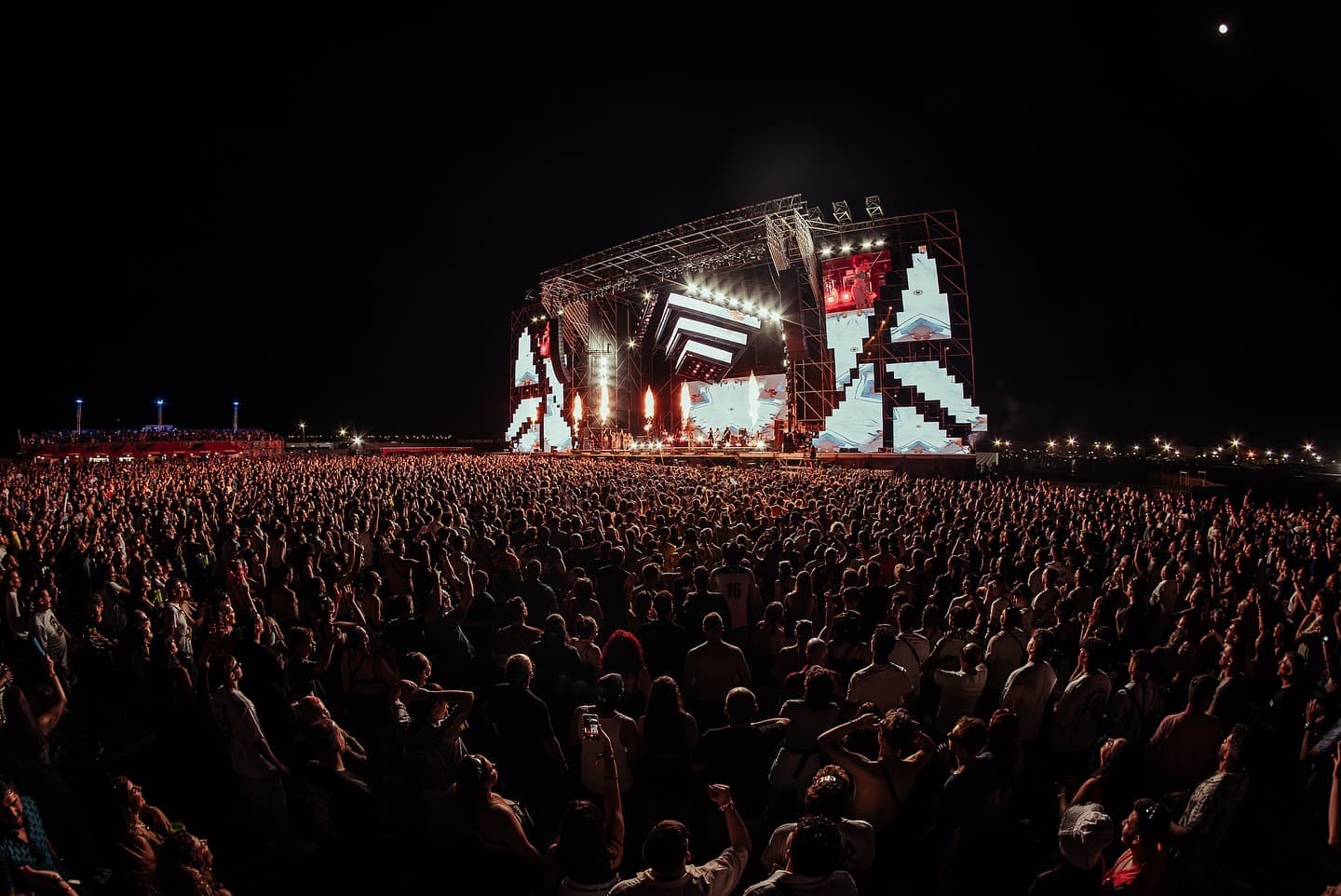
It is undeniable that, from a strictly operational point of view, the new model offers compelling advantages. Those who defend this restructuring applaud the eradication of the historically exhausting evening pilgrimage. It is no longer necessary to cross Barcelona against the clock, dealing with the saturation of public transport during peak hours, to link the last daytime set with the opening of the night sessions. At Fira Gran Via, the redesign of the stages has reached a commendable technical maturity, allowing the transition between sunset and dawn to be a continuous and frictionless sonic journey, from 5:00 PM to 7:00 AM. Furthermore, the firm commitment to large-scale techno shows ensures the financial viability of a brand that must navigate a hyper-competitive market. The response from the mass audience has been resounding, validating this commitment to logistical comfort and scenic grandiloquence.
The lost echo of the Barcelona asphalt
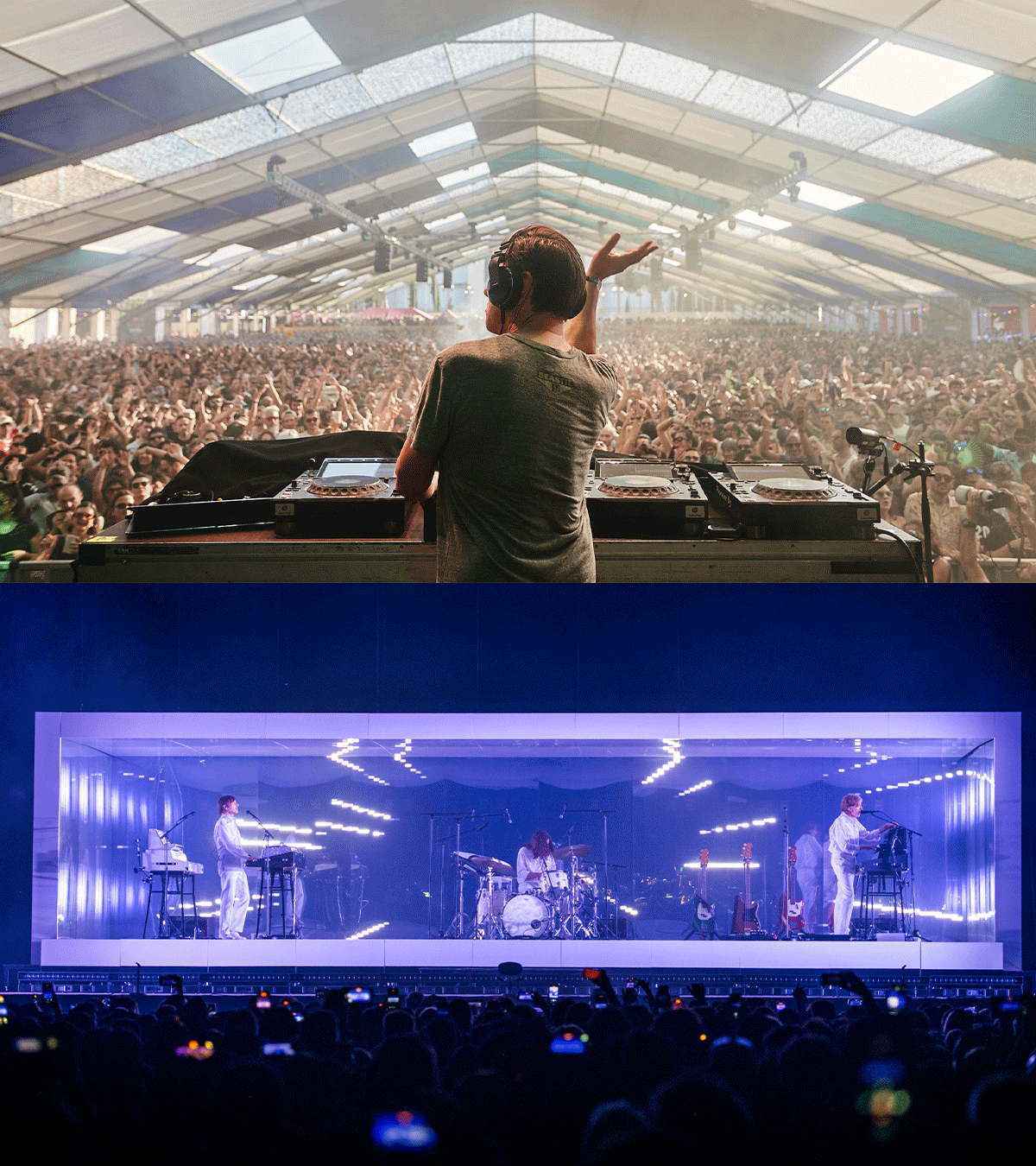
However, from this platform, we feel an inevitable pang of analytical nostalgia when walking through these immense unified pavilions. The historical magic of Sónar resided, to a large extent, in its dual character and its intimate symbiosis with the urban fabric of Barcelona. Sónar by Day was not simply a preamble; it was a laboratory bathed in the Mediterranean sun, a vital space where experimental avant-garde, risky artistic discourses, and niche technology shook hands closely. By shifting all the weight to the industrial monumentality of the Fira, we run the risk of falling into what some purists already call a certain artistic gentrification. The programming seems to have ceded ground to formulas of guaranteed success, prioritizing the great totems of current hard-techno and adopting dynamics that recall successful Sunday macro-parties. We perceive a subtle turn towards fast-consumption hedonism, where the delicacy of sonic experimentation is often buried under the powerful bass of the main stages.
The difficult balance between the box office and the laboratory
We fully understand that the contemporary music industry demands brave and, often, painful decisions. François Jozic and his team have demonstrated impeccable organizational capacity, delivering a festival without logistical flaws that has worked like a Swiss watch. But an event of the historical, cultural, and referential magnitude of Sónar is not measured solely by its enviable attendance figures or the convenience of its access. It is measured by its ability to dictate the future of electronic music, to intellectually discomfort, to educate the attendee's ear, and to discover those transgressive sounds that will dominate clubs within five years. By homogenizing the experience into a single large-scale format, the festival could be blurring that thin line that always separated it from being, simply, another massive event in the saturated European circuit.
Looking towards the horizon of the dance floor
The 33rd edition leaves us with a bittersweet taste, a complex mixture of deep admiration for the impeccable technical execution and genuine concern for the future artistic direction. We firmly believe that commercial profitability and cultural avant-garde do not have to be mutually exclusive concepts. The great challenge for the coming years will be to find a way to reintroduce that independent laboratory spirit within the new colossus of asphalt and steel. If Sónar wishes to keep its crown intact as the intellectual beacon of global electronics, it must remember that logistical efficiency should never silence sonic disruption. The dance floor of the future needs, today more than ever, spaces where artistic risk takes precedence over commercial certainty.